
Dairy farm
Polymer feed-table coating: more feed intake — higher milk-yield potential
A feed table is not just a concrete line in front of cows. It is the place where the ration either turns into productivity or loses part of its value because of dirt, damaged concrete, moisture and an uncomfortable surface.


In short
feed intake in the Lug Zdorovya coating study.
milk per cow per day when moving from concrete to polymer.
expert conclusions confirm sanitary applicability.
Evidence base
What the numbers show
We turned the key findings into simple charts. These are not universal promises for every farm, but study data for Lug Zdorovya coating and a reason to calculate the economics for your specific conditions.
A correct farm-specific conclusion comes after calculation: area, herd size, current yield, concrete condition and feeding management.
Feed stays more accessible for the cow
in the study, feed intake on the polymer table was higher than on concrete
+7.0–8.6%
More feed intake means stronger milk-yield potential
when moving from concrete to polymer surface, average daily yield increased
+0.4–1.3 kg
The project economics become clearer
under study conditions, first-month payback was estimated at this share of work cost
65.7–77.7%
What we rely on
Scientific article, 2024
Assessed surface condition, microbial load, feed intake, milk productivity and application economics.
Expert conclusion No. 91
Confirms compliance with sanitary-epidemiological requirements for animal feeding zones.
Expert conclusion No. 4194
Confirms compliance with hygienic requirements. Application area: farms, livestock complexes and feed tables.
What it looks like on a farm
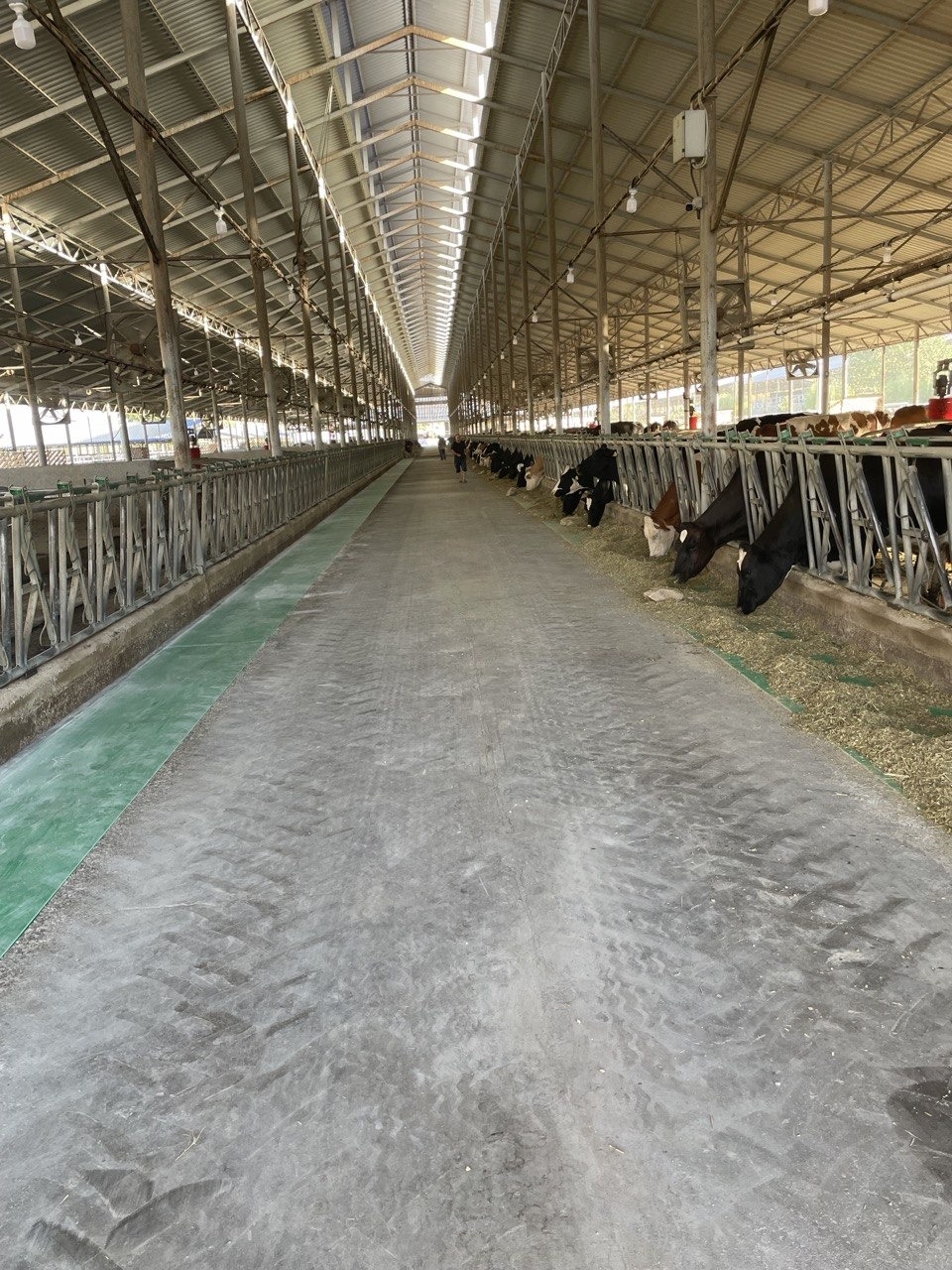
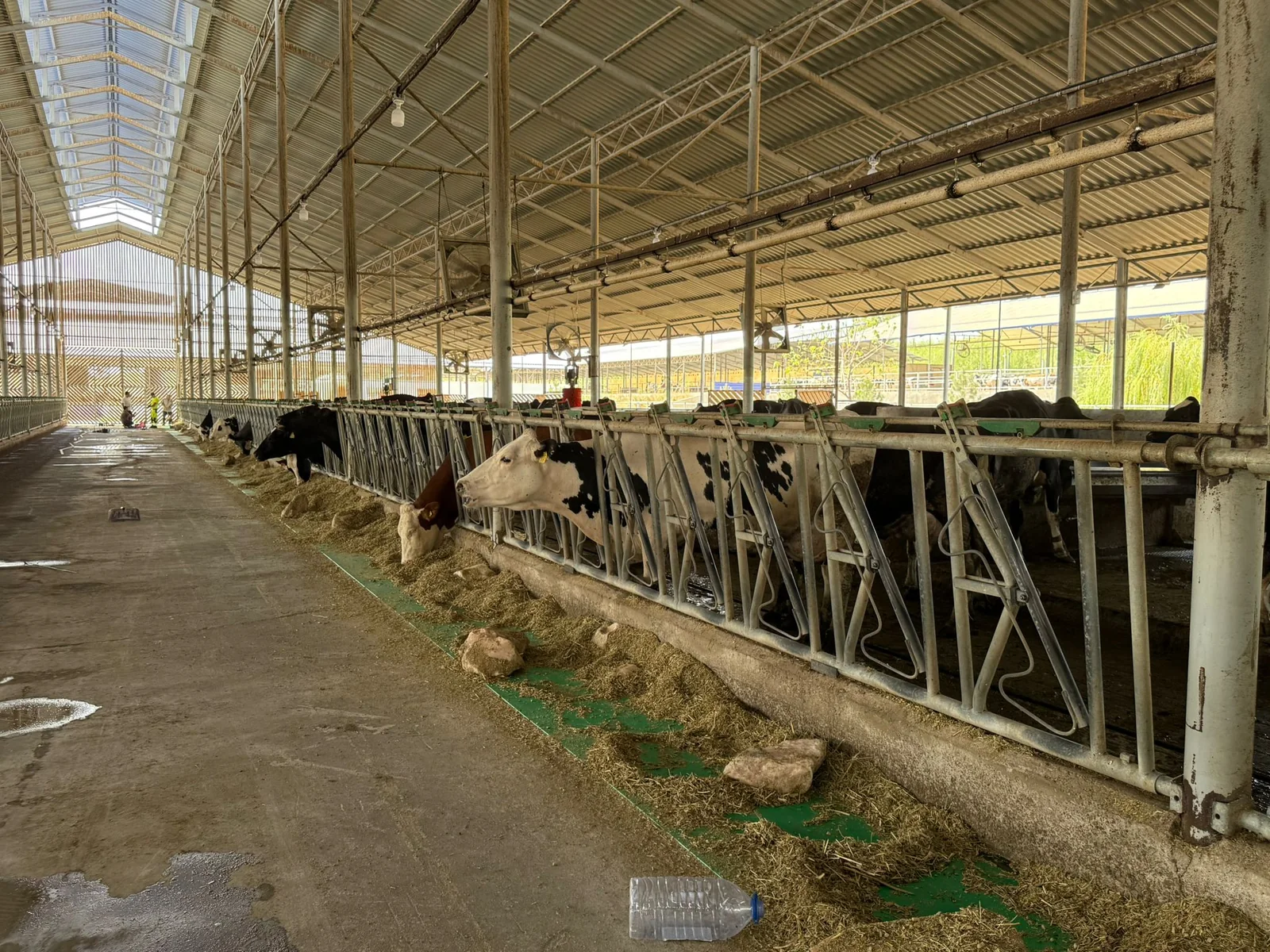
The problem starts with the surface
Even a well-balanced ration cannot work at full potential if the feed table is damaged, rough or absorbs moisture and feed acids. Feed is harder to push on such a surface, leftovers become contaminated faster, and particles of concrete, sand or cement dust may enter the feed mass. For a cow this is not a “repair detail”, but daily contact with feed.
What the polymer coating does
Lug Zdorovya covers concrete with a dense polyethylene surface. It separates feed from porous or damaged concrete, reduces absorption of moisture and feed components, makes feed easier to push by hand, tractor or robot, and simplifies daily cleaning of the feeding area. This is especially important on operating farms where concrete feed tables are already worn.
- protection of concrete from moisture, feed acids and mechanical wear
- less contact between feed and damaged concrete, sand, gravel and cement dust
- a smoother surface for feed pushing and daily cleaning
Why this affects feed intake
A cow eats more often and more calmly when feed is accessible, cleaner and placed on a comfortable surface. In the Lug Zdorovya coating efficiency study, cows on the polymer feed table ate 7.0–8.6% more feed than cows on concrete. This is not coating magic, but clear zootechnical logic: the easier it is for an animal to access clean feed, the more stable the ration works.
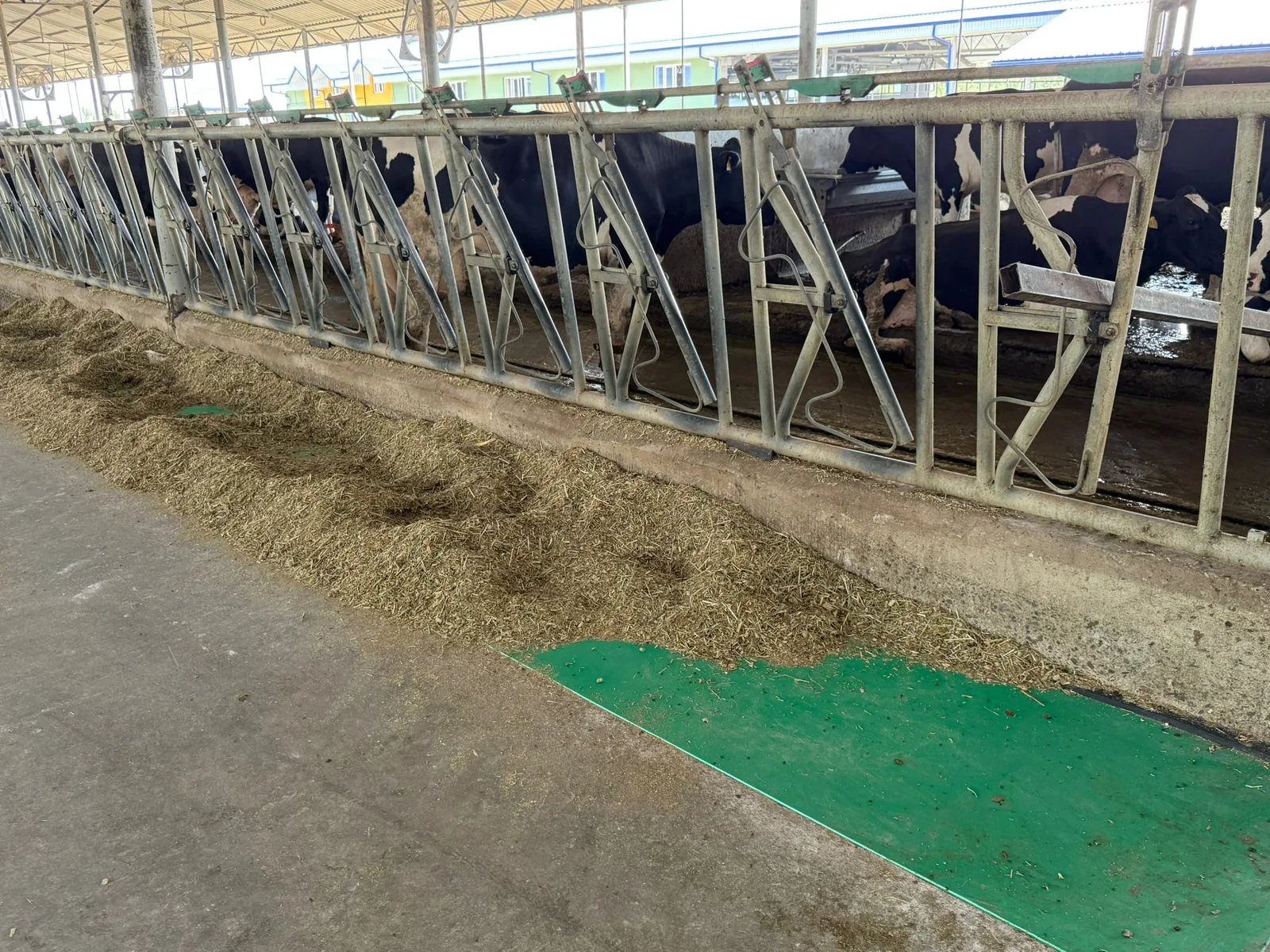
What the study showed
The scientific article “Efficiency of polymer feed-table coating for dairy cows” evaluated surface condition, microbial contamination, feed intake, milk productivity and economics. After six months, the polymer coating retained a 5-point surface rating, while the concrete feed table was rated 3 points. The study also reported a tendency toward lower microbial contamination of the feeding surface and feed residues.
- +7.0–8.6% feed intake compared with a concrete feed table
- +0.4–1.3 kg milk per cow per day when moving from concrete to polymer
- 65.7–77.7% first-month payback under study conditions
Important: this is not a universal guarantee, but a calculated effect
The result on a specific farm depends on the initial feed-table condition, stocking density, ration quality, feed-pushing frequency, current milk yield, milk price and daily management discipline. Therefore, a proper approach is not to promise the same payback to everyone, but to calculate the project using your farm data. This is how LabLog works: we look at area, surface condition, number of cows and the production task.
Documents and sanitary safety
According to expert conclusions No. 91 and No. 4194, the Lug Zdorovya coating complies with unified sanitary-epidemiological and hygienic requirements. The documents specify its application area: livestock complexes and farms, feed tables and animal feeding zones. The coating material is polyethylene. For a farm this is an important trust factor: the solution is not used as a random construction sheet, but as a specialised surface for animal feeding areas.
When the coating is especially relevant
Polymer feed-table coating is worth considering if concrete is already damaged or absorbs moisture, if feed becomes contaminated quickly, if it is hard to push feed, or if the farm is building a new barn or planning renovation. It is especially important for farms where the feed table is serviced daily by machinery or robots: a smooth surface helps make the process more stable.
How LabLog helps in Uzbekistan
LabLog Group helps farms in Uzbekistan assess where the coating can give the strongest effect: we measure feed-table length and width, clarify the number of cows, concrete condition, current feeding technology, feed-pushing frequency and production goals. Then we prepare a calculation, discuss installation, operation and possible project economics. Our task is not just to sell material, but to help the farm get a clear solution for real conditions.
FAQ
FAQ
Why does a farm need polymer feed-table coating?+
The coating makes the surface smoother and more hygienic, protecting concrete from moisture, silage acids and mechanical wear. Feed remains more accessible to the cow and the feeding area is easier to clean.
Can the payback of the coating be promised in advance?+
No. A correct conclusion requires calculation: feed-table area, herd size, current milk yield, concrete condition, feeding organisation and work cost. That is why LabLog prepares an individual calculation.
What data is needed for the calculation?+
The calculation needs feed-table area, number of cows, current average daily milk yield, concrete surface condition, feeding mode and feed push-up frequency.
Sources and documents
Calculation for your farm
We will calculate coating economics
Send feed-table area, herd size, average daily yield and concrete condition. We will prepare a preliminary payback estimate and show where the coating can bring the strongest effect.