
Hygiene
Hygiena ATP control: how to verify sanitation quickly
Sanitation should not be confirmed only visually. ATP control helps quickly detect organic residues and decide before the next batch starts.
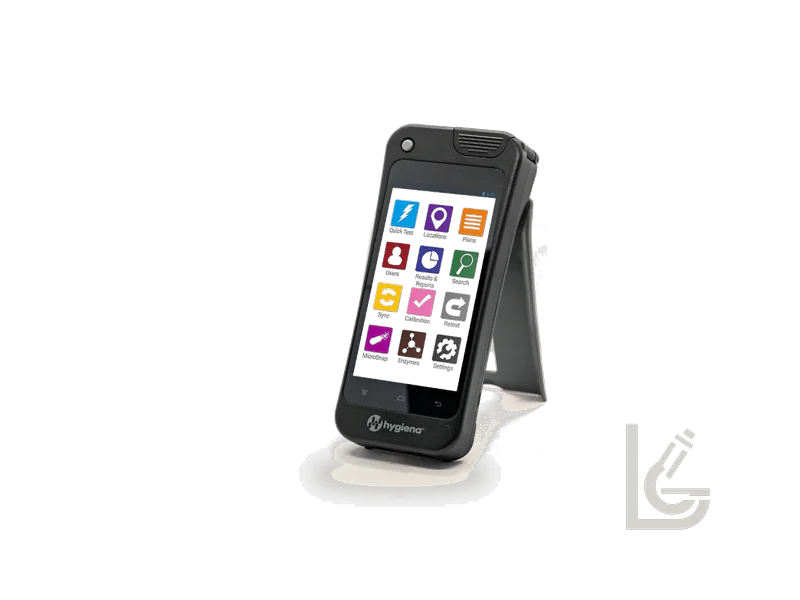

What ATP tests check
Contact surfaces, equipment, risk zones, water and cleaning effectiveness are checked. The result helps document sanitation control and identify weak points faster.
Where it is especially useful
ATP control is useful in dairy, meat, ready-food production, laboratories and places where product or batch change requires quick cleanliness verification.
How to implement without chaos
Control points, thresholds, testing schedule, staff training and regular deviation review are needed. LabLog helps select EnSURE Touch, tests and a working procedure.
What RLU measures—and what it does not
A luminometer measures the light reaction from the test and reports relative light units (RLU). The signal relates to ATP residues in the sampled area and provides a rapid pre-operational hygiene check. It is not a direct bacterial count and does not identify microorganisms.
Compare results only within a defined system: the same instrument type, compatible test, sampling area and technique. Numbers from different platforms are not directly interchangeable.
How to define sites and limits
Choose sites by risk: product-contact surfaces, difficult joints, seals, valves, fillers, post-CIP locations and areas with previous failures. Record sampling area, swabbing motion, time after cleaning and time before production.
Manufacturer starting guidance can support implementation, but working pass/caution/fail limits must be confirmed from site data and risk. Hygiena cites 20 RLU pass and 60 RLU fail as typical EnSURE Touch starting points; these are not universal legal limits for every facility.
Actions after a failed result
Isolate a failed site, reclean and retest before release according to the internal procedure. Record the result with site, shift, operator and corrective action. Repeated failures require root-cause review: equipment design, chemical concentration and temperature, mechanical action, time or training.
A site trend is more useful than one result. It reveals gradual deterioration and supports maintenance before failure becomes systemic. Retain microbiological verification under a separate risk-based plan.
FAQ
FAQ
What does ATP control show?+
ATP control shows the presence of organic residues on surfaces, in water or on equipment. It is rapid screening of cleaning effectiveness and sanitation discipline, but not a replacement for all microbiological analyses.
Where should ATP control points be placed?+
At risk points: after washing lines and tanks, on contact surfaces, before shift start, after product changeover and in areas where deviations occur most often.
Why should ATP results be recorded?+
Result history shows trends, helps train staff and quickly analyse repeated issues. For production, it turns cleaning from “visually clean” into a managed process.
Can another facility’s RLU limits be reused?+
Only as manufacturer starting guidance. Working limits must be verified for the instrument, test, surface, sampling technique and site risk.
Sources and documents