
Milking parlours
How to choose a DairyMaster milking parlour: rotary, Double Up, Fast Exit or herringbone
A milking parlour cannot be selected from herd size or stall count alone. The same herd may require different solutions depending on milking frequency, group size, available shift time, operators, building geometry, collecting yard, milk cooling and growth plans. This guide treats selection as an engineering task for a farm in Uzbekistan.

In short
What makes DairyMaster 4×0 milking different
DairyMaster uses simultaneous 4×0 pulsation: all four teats are in the milk phase together and then receive the rest phase together. The manufacturer describes it as unique and different from common 2×2 alternating pulsation, with a vacuum cycle intended to resemble calf suckling.
Official DairyMaster pages state that improved milk-out can typically provide up to 5% more yield and reduce milking time by about one minute per cow. These are manufacturer claims referring to research, not universal performance guarantees. Available primary sources confirm the 4×0 technology but do not independently establish DairyMaster as the world’s only manufacturer of such parlours.
- All four teats: simultaneous milk and rest phases
- Different from alternating 2×2 pulsation
- Performance is verified for the specific herd and setup
The inputs that genuinely determine the choice
The calculation starts with milking cows and milking frequency. It then considers production-group size, target duration of one milking, available operators and growth allowance. Building plan, collecting yard, entry and exit routes, veterinary drafting, milk room, water, power, drainage and cooling are reviewed separately.
If one of these blocks is not aligned, nominal equipment capacity may not become farm throughput. A larger rotary cannot compensate for slow yard loading; Fast Exit cannot save time without a clear area in front of the stalls.
- Current and planned milking herd
- Frequency, groups and shift duration
- Building, collecting yard and cow routes
- Water, power, cooling and drainage
Swiftflo Cow Rotary: when continuous flow is needed
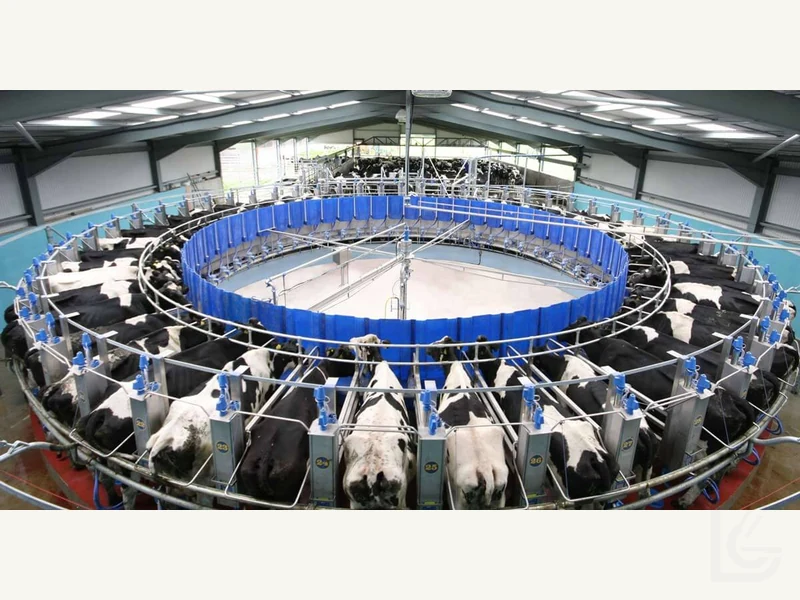
The rotary creates continuous cow entry onto a rotating platform. It is especially relevant for medium and large farms that value consistent rhythm, advanced automation and predictable shifts. Stall count alone does not provide cows per hour: platform speed, average milking time, stall utilisation, repeat rotations, operator work and collecting-yard capacity all matter.
Swiftflo Cow Rotary is configured with entrance gates, Cow Motivator, Cow Retention, clusters, milk meters, teat care, external washing, Milk Manager and exit drafting.
Swiftflo Double: one cluster per stall
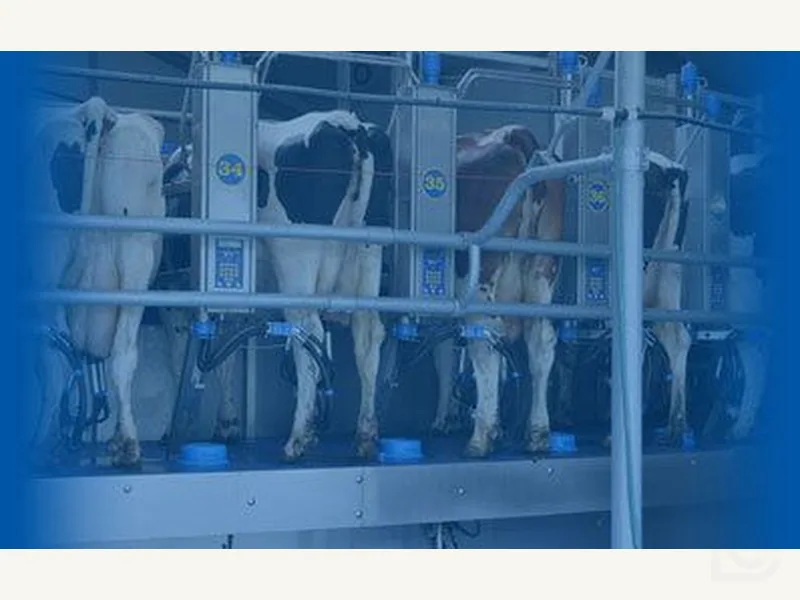
In Swiftflo Double every stall has its own cluster. A group loads, milks and exits as one cycle. It suits farms needing productive operation with a clear operator layout. Actual performance depends on slow-cow loading, udder preparation, the last cow to finish and group exit.
Design checks stall width, operator pit, entry and exit gates, in-parlour feeding, Commander and Milk Manager positions, and downstream drafting.
Fast Exit: when group changeover is the constraint
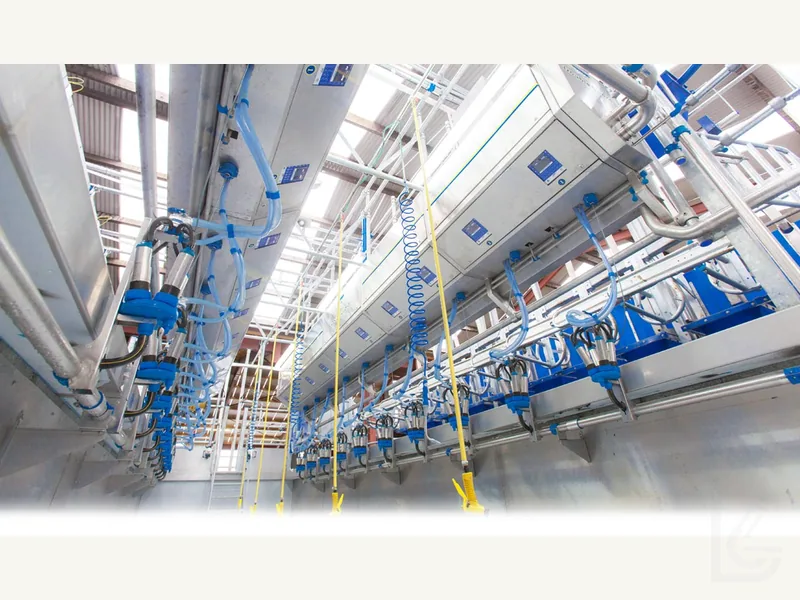
Fast Exit raises the front restraint and releases the row together. This can reduce time between cycles but requires a wide clear zone in front of the stalls. If cows meet a narrow alley or gate after release, the advantage disappears.
Fast Exit therefore cannot be selected without a building plan. LabLog checks exit depth, direction of travel, drafting and whether the next group can load without crossing flows.
Herringbone and Swing Over: flexibility for new builds and retrofits
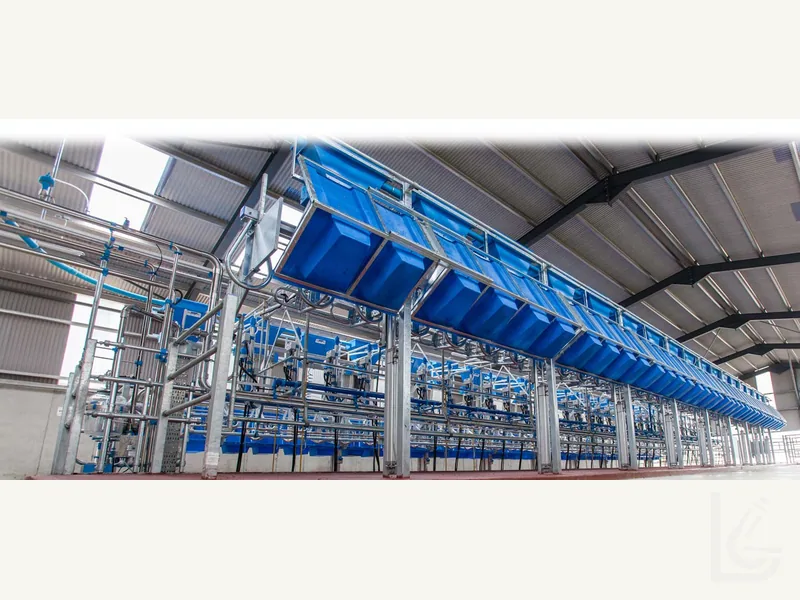
In a herringbone parlour cows stand at an angle to the pit. The angle affects stall width, operator access, cluster attachment and exit. The system may use a dedicated cluster per stall or a Swing Over arrangement that shares clusters between sides.
Swing Over reduces cluster count but changes the cycle and potential throughput. It is not simply a cheaper Double Up; selection follows group, milking-time, labour and building-geometry calculations.
Automation: data must lead to action
Milk Manager, DairyVue 360, Weighall Milk Meters, Commander, VoiceAssist, MooMonitor+ and Automatic Drafting solve different tasks. A meter measures milk, identification links it to the cow, software presents events and drafting gates route selected animals.
Automation creates value only with consistent identifiers, event rules, staff ownership and regular data checks. LabLog includes operating roles and training in commissioning.
Cooling, water and washing cannot be left until later
A tank or silo must accept the actual peak milk flow, not only daily average volume. A plate cooler can reduce refrigeration load when water flow and temperature are suitable. Heat recovery can prepare part of the hot water, but its value depends on cooling and demand patterns.
Milk lines, vacuum, pumps, filters, washing and drainage are engineered with the parlour. Insufficient hot water or incorrect hydraulics can constrain even correctly selected milking equipment.
How a DairyMaster project proceeds with LabLog
A project starts with an engineering brief and site plan. LabLog then develops cow-flow logic, preliminary parlour type and size, automation scope, milk and vacuum systems, cooling and building requirements. Supply, installation, verification, first milking, training and a service plan follow approval.
Retrofit projects also survey the existing pit, milk line, vacuum, power, water, foundation and the farm transition plan. Publishing a price without these inputs would be misleading: equipment, civil work, utilities, logistics, installation and automation define the budget.
Quick request
Choose a milking parlour for your farm
A few short answers are enough for the first estimate. The detailed engineering brief can be completed later with a LabLog specialist.
FAQ
FAQ
How many milking stalls does a farm need?+
It is calculated from milking herd, frequency, groups, target shift duration, milking time and losses from loading, exit and sanitation. Herd size alone is insufficient.
When is a rotary better than a parallel parlour?+
A rotary is strong when continuous flow, advanced automation and consistent rhythm are needed for a medium or large herd. A parallel parlour may be more rational for group operation and a different building geometry. The project decides.
Can an existing parlour be upgraded?+
Often yes, but the pit, stallwork, milk line, vacuum, washing, power, water, exit and transition plan must be surveyed first.
Why is there no parlour price on the website?+
Price depends on parlour type and size, automation, milk and vacuum systems, cooling, building, logistics, installation and commissioning. A universal public price would be misleading.
What information should be sent to LabLog?+
Herd size, milking cows, frequency, groups, shift duration, building plan, new build or retrofit, water, power, cooling, operators and desired automation level.
Sources and documents