
Calf feeding and rearing
Milk taxi or automatic calf feeder: choosing Holm & Laue MilkTaxi or CalfExpert
Good calf feeding is more than delivering milk. Every portion must arrive on time at the intended temperature and concentration, while the equipment and milk line require reliable cleaning. Holm & Laue offers two levels of automation: operator-led mobile MilkTaxi units and CalfExpert for individual feeding in groups. This guide explains every model, the differences and the project requirements for Uzbekistan.


In short
From the 1991 feeder to MilkTaxi and CalfExpert
Holm & Laue was founded in 1991 as a specialist in calf-rearing equipment. In 2005 it introduced MilkTaxi, combining preparation, transport and measured milk dispensing. Pasteurisation followed in 2006, MilkTaxi 4.0 with SmartMix and SmartID in 2016, and CalfExpert in 2019.
The range developed around one goal: repeatable, manageable feeding. A farm can begin with MilkTaxi while keeping an operator in the process, or build an automated workflow around CalfExpert, HygieneStation, DoubleJug and WholeMilkPlus.
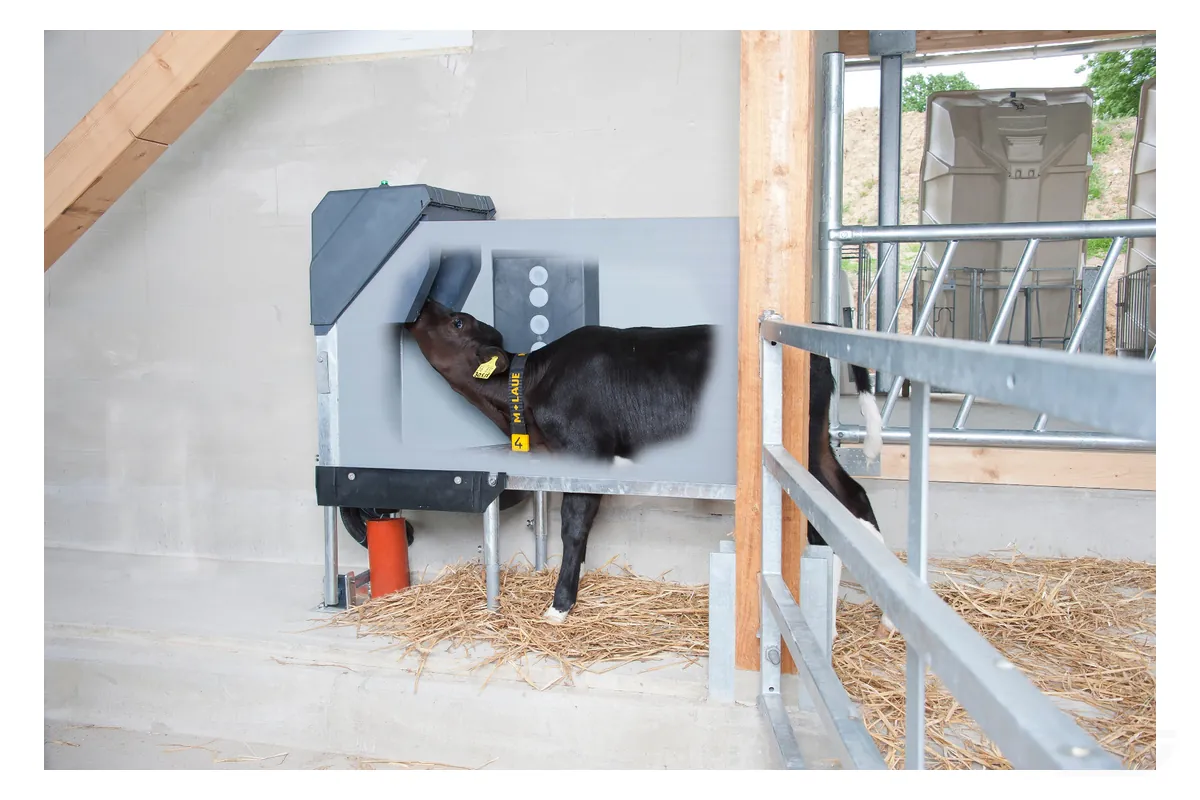
What the equipment actually standardises
Manual feeding commonly suffers from daily variation in water temperature, powder quantity, portion size and cleaning quality. MilkTaxi manages the batch and dispensing; CalfExpert manages each calf’s portion and schedule.
Equipment does not replace good milk replacer or milk, clean water, a sound feeding programme, dry bedding, ventilation and daily observation. It reduces variation, documents the process and removes heavy repetitive work.
- Temperature, concentration and volume follow the farm protocol
- Cleaning is a mandatory part of the process
- Data helps reveal deviations but does not diagnose
How MilkTaxi works: five repeatable steps
The operator adds whole milk or water for milk replacer, sets volume and temperature, and starts the base agitator and heater. MilkTaxi then travels to the calves and the pump dispenses a programmed portion. After the route, a semi-automatic programme helps clean the tank, pump and hose.
The 250 W base agitator stays out of the way during cleaning. Surface heating across the base reduces hotspots. Nine dosing levels, wireless control up to 10 m and the EL-AN electric drive are available.
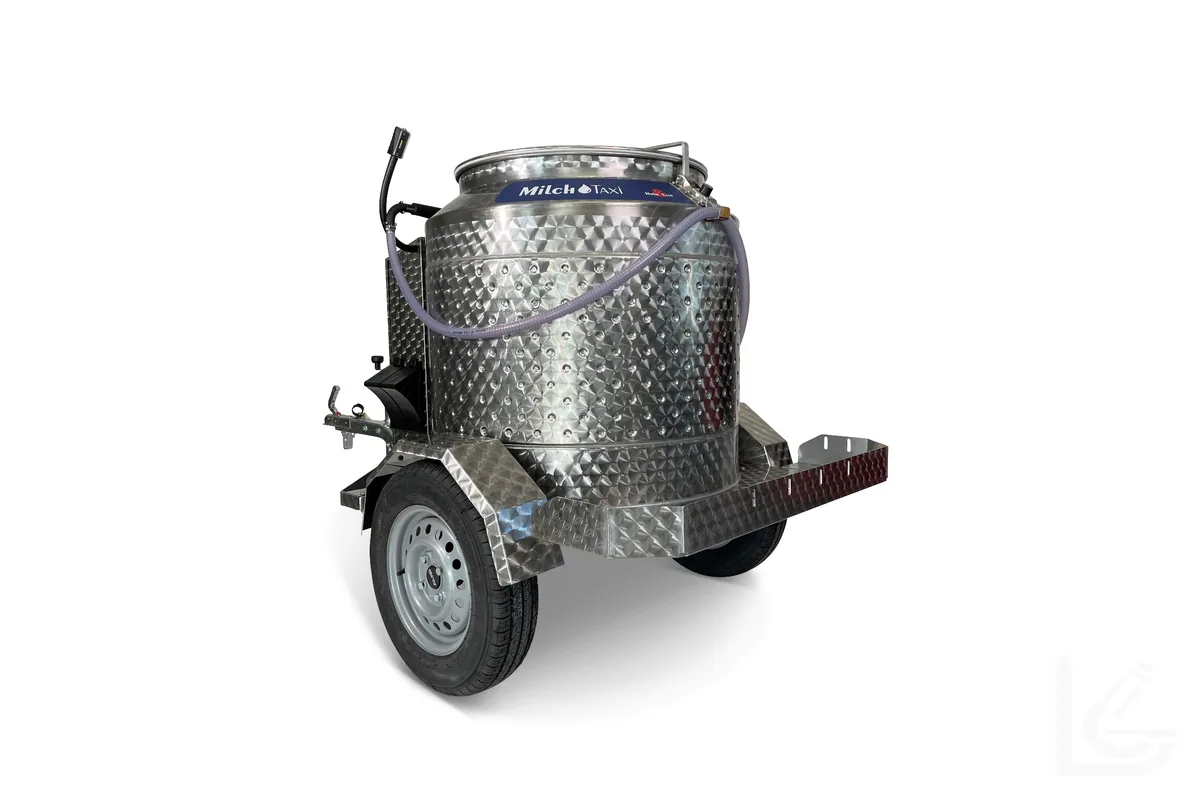
All six MilkTaxi models: how to choose
MilkTaxi 100 l targets roughly 20 calves or 200 l/day and runs on 230 V. MilkTaxi 150 l targets about 30 calves or 300 l/day. The self-propelled MilkTaxi 260 l suits roughly 50 calves or 500 l/day. All three use a stable four-wheel chassis, with optional pasteurisation.
MilkTaxi 260 l Trailer is a single-axle unit for on-farm routes. MilkTaxi 400 l Trailer has a 400 l working capacity and supports up to 800 l/day over two cycles. MilkTaxi XXL Dosing Unit adds a pump, arm and control unit to an existing tank and vehicle; tank, agitator and pasteuriser are not included.
LabLog checks calf count, portion size, feeds, route, doors, slopes, power, cleaning point and pasteurisation needs.
- 100 l: 230 V / 16 A, 3 kW heating
- 150 l: 400 V / 16 A, 5 kW; 260 l: 400 V / 16 A, 6 kW
- 400 l Trailer: 400 V / 16 A, 9.7 kW heating
SmartMix, SmartID, PlusTank and FlushMaster
SmartMix measures level and temperature and helps calculate water and powder for the selected volume and concentration. SmartID links MilkTaxi to pen identification and feeding curves for individual allowances and gradual weaning; it is unavailable on trailer models.
PlusTank adds up to 60 l of separate milk or mix and connects to the dosing pump. FlushMaster washes buckets with a rotating nozzle at the pen. Options should be defined before ordering so the base configuration matches farm practice.
Whole-milk pasteurisation: value and limits
Pasteurisation is a separate MilkTaxi option. The manufacturer’s manual documents PA63/35: 63 °C for 35 minutes, followed by cooling or adjustment to feeding temperature. It helps manage microbial load when incoming milk and subsequent hygiene are controlled.
Pasteurisation does not repair poor raw material, remove antibiotics or automatically make every non-saleable milk suitable. Colostrum requires a separate approved process: the MilkTaxi manual prohibits pasteurising material above 15% dry matter and repeat pasteurisation. A veterinarian and farm technologist make the decision.
CalfExpert: individual feeding in groups 24/7
CalfExpert identifies the calf, checks its allowance and prepares a fresh portion. Milk reaches the station in about three seconds. Eight curves with up to 16 adjustment points manage the starter phase, intensive feeding and weaning in 0.1 l daily steps.
A standard system serves up to 100 calves through four stations. QuadroFlex with two PowerMixers lets four calves drink in parallel and raises designed capacity to 120 calves at four HygieneStations. CalfExpert records intake, drinking speed and visits; CalfGuide attention lists support inspection but do not diagnose.

HygieneStation, DoubleJug and WholeMilkPlus
HygieneStation is available in two versions. Standard, with plastic walls reinforced by metal inserts, is intended primarily for dairy-calf rearing; it uses QuickDrain and can be tilted for cleaning. HeavyDuty is a wider, all-steel station for larger calves in beef and fattening systems, fixed to the floor on four feet. The version is selected for animal type, group size and layout.
DoubleJug has two cooled tanks in 2 × 190 or 2 × 380 l versions. One supplies whole milk while the other is cleaned and filled. WholeMilkPlus combines storage, cooling, supply and cleaning options including EvenMilk, WholeMilkSmart, SmartWash and ring lines. It is not a mandatory package: the system is designed for the ration, milk volume, feeder count and farm layout.
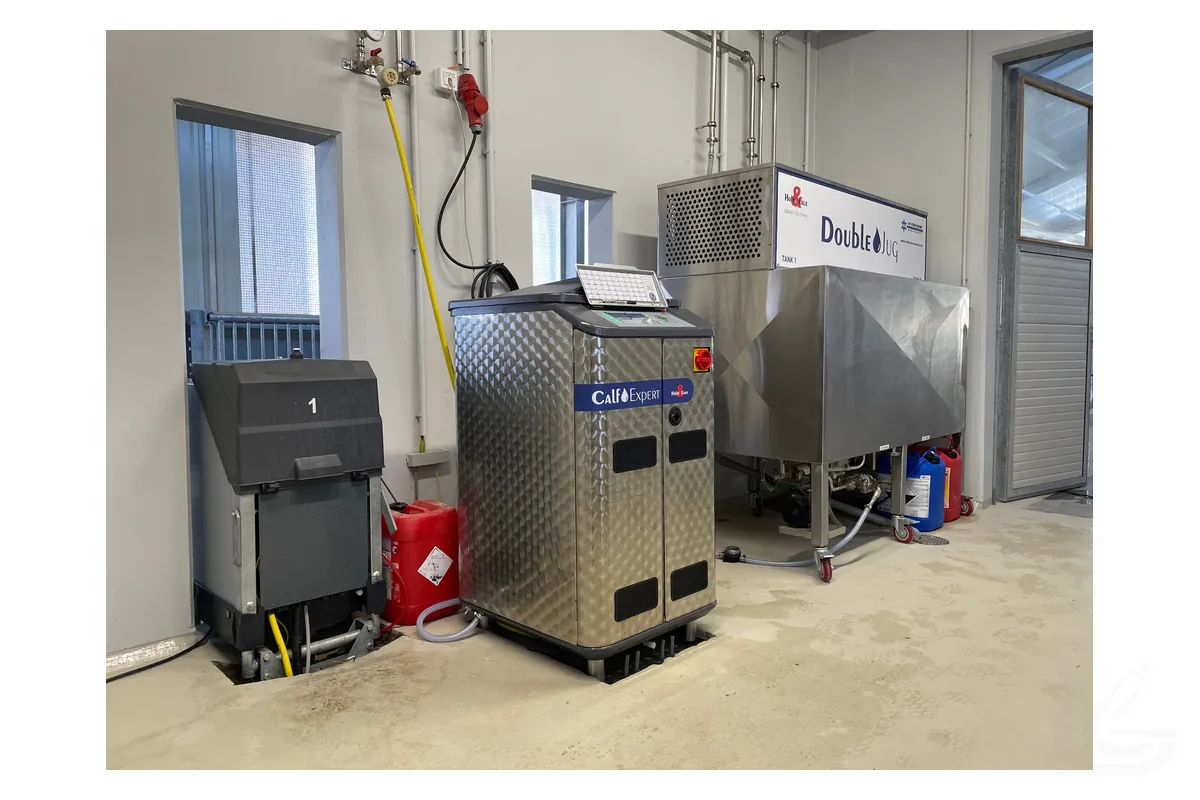
MilkTaxi or CalfExpert: a practical choice
MilkTaxi suits individual hutches and smaller groups, avoids a complete barn rebuild and keeps operator observation. It removes bucket carrying and speeds preparation, although staff remain tied to the route.
CalfExpert performs well with group housing from roughly 8–10 calves per pen, a steady calf flow and limited labour. It feeds around the clock and collects individual data, but needs correct layout, water, power, drainage, cleaning and daily checks. Often both systems work together: MilkTaxi covers individual hutches or quarantine and CalfExpert the main groups.
What to check before supply in Uzbekistan
MilkTaxi projects require calf numbers, allowance, cycles, route, doors, power, water and cleaning area. CalfExpert additionally needs group plans, stations, hot and cold water, drainage, whole-milk parameters, powder storage and connectivity.
Uzbekistan’s hot climate increases the importance of milk storage, hygiene intervals, ventilation and protection from sun and dust. LabLog gathers data, confirms the specification, supplies, commissions and trains. Prices are not published because the final project depends on model, options, milk system, site preparation and service.
- Define process and layout before the equipment package
- Power, water, drainage and cleaning belong in the technical brief
- Commissioning and training matter as much as specifications
FAQ
FAQ
Which MilkTaxi capacity should I choose?+
Capacity is calculated from calf numbers, allowance, feedings and cycles. Route, power and pasteurisation are also checked. LabLog compares all six options.
Does every MilkTaxi pasteurise milk?+
No. Pasteurisation is a separate configuration or option on applicable models.
Can colostrum be pasteurised in MilkTaxi?+
The manual prohibits pasteurising material above 15% dry matter. Colostrum requires a separate approved process and equipment.
How many calves can CalfExpert serve?+
Up to 100 calves at four stations; with QuadroFlex the manufacturer states up to 120 calves at four HygieneStations. Final capacity depends on programme and groups.
Can CalfExpert use whole milk?+
Yes, with the appropriate supply system. DoubleJug and WholeMilkPlus support storage, cooling, supply and cleaning.
Does LabLog supply Holm & Laue in Uzbekistan?+
Yes. LabLog prepares the technical brief, selects equipment and arranges supply, commissioning, training and service communication in Uzbekistan.
Sources and documents
Next step
LabLog will configure the calf-feeding system for your farm
Send calf numbers by age group, the feeding programme, calf-barn plan, milk source and route lengths. We will compare MilkTaxi and CalfExpert, check water, power and cleaning requirements, and prepare a working configuration for your farm in Uzbekistan.
- Match the model and capacity to the actual daily workload
- Plan stations, tanks, routes, water and power
- Arrange supply, commissioning, training and service support
The form request reaches the LabLog team’s Telegram chat. A specialist will contact you to clarify the project inputs.