
Cotton · Moisture control
Wile Cotton: raw cotton moisture control in Uzbekistan
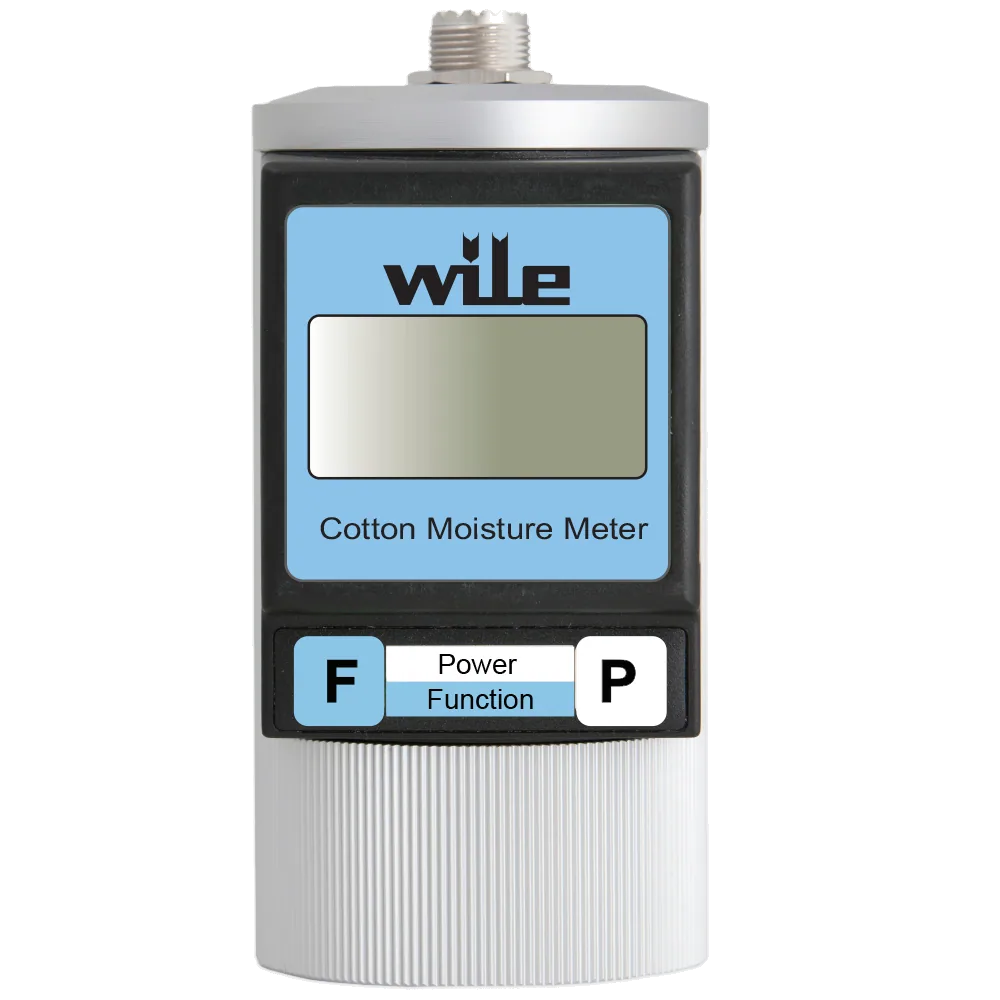
Moisture matters when receiving, storing and preparing cotton for processing. Wile Cotton with its required Wile 251 probe supports rapid measurements of prepared raw-cotton samples. Buy both components from LabLog Group with staff training and support in Uzbekistan.

In short
Why cotton control matters in Uzbekistan
Cotton supplies an important production chain in Uzbekistan, from farms and ginning facilities to yarn, fabric and finished goods. Its value involves both cultivation and domestic processing.
An official industry meeting report dated 13 August 2025 stated that textiles employed more than 500,000 people and that 90% of the country's yarn and fabric production used cotton. These are textile-industry figures, not employment in cotton farming alone. Official presidential website.
Textile industry exports reached USD 2.6 billion in 2025, with products supplied to 75 countries. These figures describe textile products, not raw cotton exports. Agency for the Development of Light Industry, 13 February 2026.
Quality management starts with incoming material. Moisture testing helps connect the condition of a cotton lot with its storage and processing requirements.
Why moisture affects cotton handling
Excessive moisture creates storage and processing problems. Excessive drying is also undesirable: dry fibre is more vulnerable to mechanical damage. A USDA-ARS review explains how moisture affects fibre preservation and gin operation. Pelletier and Byler, 2020.
A useful reading must be tied to the lot, sampling location, measurement method and requirements of the process stage. In an Uzbek Agroinspection report dated 3 October 2025, 226 of 287 disputes concerned trash and moisture in cotton material. These are period-specific figures demonstrating the practical importance of reproducible, documented measurements. Agroinspection report.
The meter and its required probe
Swipe the table left to see all columns.
| Parameter | Wile Cotton |
|---|---|
| Material | Loose raw cotton |
| Current specified range | 7–30% |
| Repeatability | ±2 percentage points |
| Power | 9 V battery, type 6LR61 |
| Base kit | Meter, case and strap, battery and manual |
| Required additional component | Wile 251 probe, ordered separately |
Specifications follow the current Wile Cotton page. Repeatability is not absolute measurement error.
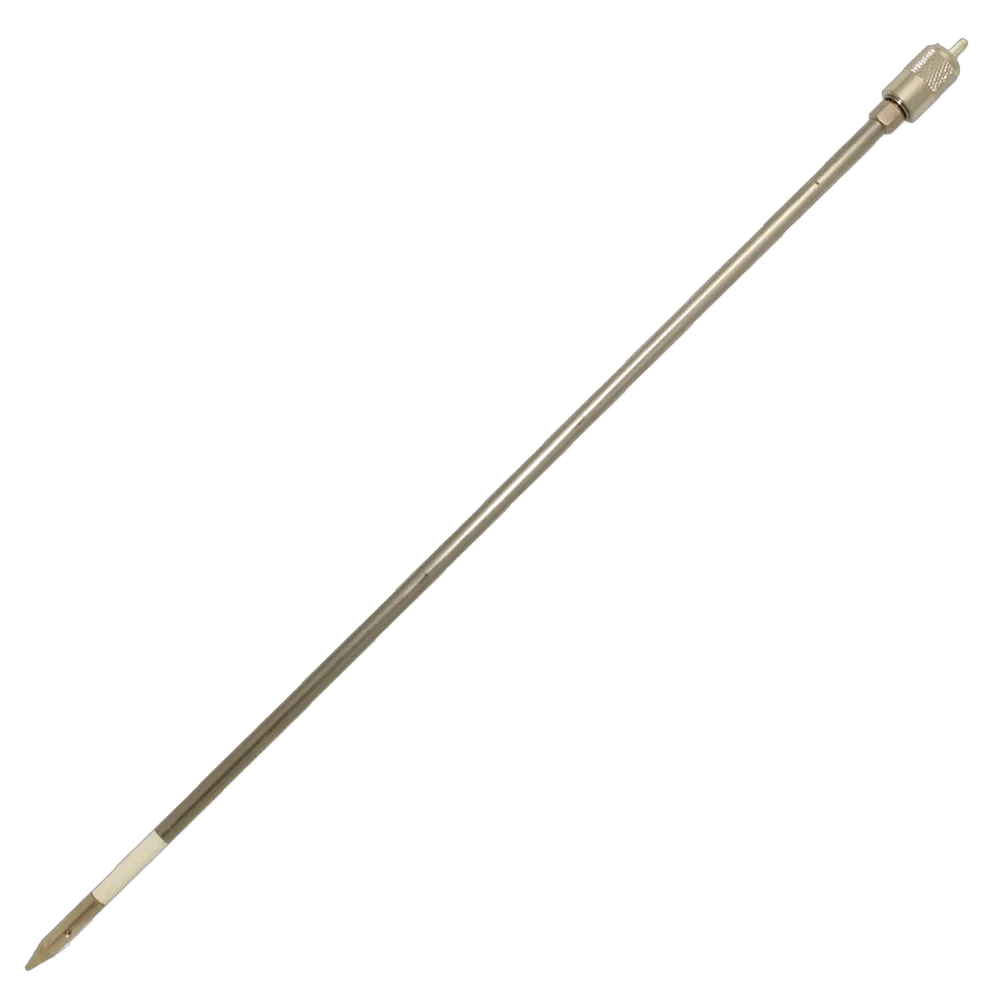
The compatible W251 probe is 50 cm long, product code 7020251. The Cotton meter's code is 7000250-CTN1. Both components are needed. W251 specification.
Order the working set: Wile Cotton + Wile 251. The probe is not included in the base Cotton kit. Although Wile lists it among hay probes, Cotton compatibility is expressly stated. A probe alone cannot produce a reading.
Where Wile Cotton is useful
The meter supports rapid checks at farms, cotton-textile clusters, receiving stations and factory laboratories.
Swipe the table left to see all columns.
| Location | Practical task | Next step |
|---|---|---|
| Farm before dispatch | Preliminary assessment of the lot | Record results and flag material needing further checks |
| Receiving station | Incoming raw-material screening | Refer questionable results to the laboratory |
| Preparation for processing | Compare lots and follow changes | Use readings alongside process requirements |
| Factory laboratory | Compare rapid and reference measurements | Establish suitability for the facility's material |
Raw cotton, separated lint and cottonseed are different test materials. Settings and readings cannot automatically be transferred between them. Compressed lint, yarn and fabric require separately established applications.
Using control at your facility
Before dispatch
Identify the lot, arrange sampling and measure a series of prepared samples. Record date, sampling points, settings and individual results. If samples differ substantially, investigate material heterogeneity, preparation and measurement conditions. This provides a basis for discussing the lot with the receiving facility and arranging laboratory confirmation.
At reception
Associate each result with the delivery before mixing it with other material. Keep sample identification when sending a sample for confirmation. Assign responsibility for sampling, measurement, discrepancies and the final lot decision under your facility's procedure.
During storage
Repeat checks on new representative samples according to the site's plan, including after events that may have changed the lot. Compare individual results as well as averages. Cotton tests a prepared sample; it does not provide a continuous moisture map of a stack. Temperature monitoring requires separate equipment.
Before processing
Comparable sampling before and after a selected operation helps the technologist discuss process adjustments with the laboratory. Follow the instrument's measurement conditions, particularly for hot samples. Continuous dryer control requires a separate measurement and automation system. The facility defines thresholds and actions in its procedure.
How a measurement is performed
Cotton uses a capacitance-based method with a selected material scale, temperature compensation, averaging and adjustment against an oven reference method.
The manual describes at least five samples from different parts of a lot, a plastic container of at least 10 litres and layered compaction to a density of 220 kg/m³. The probe must contact the cotton without touching the container walls or bottom. Loosen and redistribute material between readings. One measurement takes up to 30 seconds, excluding sampling and preparation. Cotton manual, sections 3–5.
- Identify the lot and sampling plan.
- Prepare the sample according to the manual.
- Measure and record the series.
- Obtain laboratory confirmation when a result needs clarification.
- Make the lot decision under the facility's procedure.
The operator should know where the sample came from and what action follows its result. Follow the full manual for the specific instrument when preparing material and operating the controls.
Choosing the cotton scale
Swipe the table left to see all columns.
| Scale | Material and trash level |
|---|---|
| 1 | General |
| 2 / 3 / 4 | Thin-fibred cotton: low / medium / high trash |
| 5 / 6 / 7 | Medium-fibred cotton: low / medium / high trash |
| 0 | Service calibration scale |
Wile Cotton manual, section 3.1.
The operator selects the trash category. The meter does not determine the percentage of impurities; moisture and trash testing remain separate operations.
Interpreting readings correctly
Repeatability describes agreement between repeated results under the same conditions. Accuracy relates to agreement with the accepted reference value. A stable reading may still have a systematic offset. Moisture Measurement.
The difference between 10% and 12% is two percentage points, not two percent of the reading. This illustrates units, not an acceptance interval for every sample. Near a decision threshold, include laboratory confirmation and account for method uncertainty rather than display resolution alone.
What scientific studies show
Avoid excessive drying during processing
Byler compared drying with moisture restoration before ginning, the separation of lint from seed. Oven measurements of the resulting lint averaged 4.8% and 5.6%, respectively. Moisture restoration improved AFIS fibre-length properties, while most foreign-matter measurements were slightly less favourable. Byler, 2005.
Drying as much as possible is therefore not a universal strategy. These values concern lint in that experiment; they are neither raw-cotton targets nor Wile Cotton operating points.
Storage conditions change the lot
Miao and Gordon monitored round seed-cotton modules at three Australian locations over three seasons. Internal moisture and temperature followed weather changes with a delay. Most quality characteristics were stable up to three months, but yellowness and elongation changes appeared after one month. Initial moisture was below 12% in all modules. Miao and Gordon, 2020.
An intake record does not replace later checks. Storage duration, rainfall and covering condition should inform sampling. These findings do not establish a universal safe storage time in Uzbekistan or validate Cotton readings through a module wrapper: test a properly prepared raw-cotton sample.
Moisture also matters for seed safety
Jaime, McKamey and Cotty analysed 14,200 South Texas seed-cotton modules from 2002–2008. Seed moisture, impurities, harvest and ginning dates, and storage time were associated with fibre quality and seed aflatoxin contamination. Jaime et al., 2013.
Raw-cotton moisture, separated-seed moisture and aflatoxin content are distinct measurements. Cotton does not detect toxins or prove their absence. Seeds and derived products require a suitable separate assay. These studies explain moisture management; they are not Wile Cotton accuracy trials or Uzbek conformity assessments.
Comparing with the laboratory
Check four conditions before interpreting a discrepancy:
- Material: compare raw cotton with raw cotton, not separated lint.
- Sample: use the same representative sample or correctly prepared comparable portions.
- Time and conditions: prevent uncontrolled changes between measurements.
- Calculation basis: use the same denominator for the moisture percentage.
A hypothetical sample containing 90 g dry matter and 10 g water has 10% water on a wet-mass basis but about 11.1% on a dry-mass basis. This mathematical example does not define Cotton's scale basis; establish it alongside the laboratory method. Compare a series of samples across the actual operating range. A single matching pair cannot validate all seasonal lots, and one offset may not correct a moisture-dependent discrepancy.
Preserve sample condition
Barker and colleagues found temperature affected moisture-transfer rates; increasing lint density slowed transfer. Lint, seeds and burs responded differently to airflow. Barker et al., 2001.
Record sampling and testing times and follow the laboratory's sample-handling procedure. If one portion is tested immediately and another is left open under different conditions, their material state may no longer match.
Specify the reference procedure
Montalvo and colleagues compared water-specific Karl Fischer titration with four oven procedures on lint conditioned to moisture equilibrium. They examined incomplete drying and mass changes from side processes. Montalvo et al., 2015.
“Checked in an oven” is insufficient documentation: identify the method and conditions. The study neither cancels prescribed raw-cotton oven methods nor requires replacing them with Karl Fischer. Different procedures are not automatically interchangeable.
Keeping a measurement log
Swipe the table left to see all columns.
| Field | Record |
|---|---|
| Lot | Identifier, supplier or field, arrival date |
| Sampling | Location and sample identifier |
| Meter | Model and serial number |
| Settings | Scale and current adjustment |
| Measurements | Individual readings and final result |
| Conditions | Relevant preparation and storage circumstances |
| Verification | Laboratory result and method, when used |
| Decision | Action and responsible person |
Retain individual readings, not only averages. An outlying result calls for checking the sample and procedure rather than automatically deleting it.
Reception and prescribed methods
Official acceptance results must follow the applicable sampling procedure, method and metrological requirements. Establish the meter's role with the laboratory: preliminary screening, internal process control or measurements used for settlement. The latter requires separate confirmation of applicability. An operating manual alone does not establish approval for dispute-resolution measurements.
Do not transfer foreign lint-moisture recommendations to raw cotton in Uzbekistan. Material, processing stage and calculation basis must match the intended decision.
Buy Wile Cotton in Uzbekistan with LabLog support
LabLog Group supplies Wile Cotton and the required Wile 251 probe. We select the kit, help set up the instrument and train your staff in sampling, preparation, scale selection, measurement and record keeping. Together with your laboratory, we organise comparison against its reference procedure.
After delivery, we support operation, help resolve questions and organise servicing. Contact us to confirm availability and lead times. Tell us where you will use the meter, the cotton material, expected moisture range and current laboratory method. We will propose a set and start-up approach for your application.
FAQ
FAQ
Where can I buy Wile Cotton in Uzbekistan?+
From LabLog Group. We supply Wile Cotton and the required Wile 251 probe, train staff and support operation. Contact us to confirm availability and lead times.
Does Cotton require Wile 251?+
Yes. Cotton cannot measure without W251. The probe is ordered separately and is not included in the base kit.
Does it measure cotton grade, fibre length or micronaire?+
Its purpose is raw-cotton moisture control. Other quality characteristics require suitable methods and equipment.
Can it replace a laboratory report?+
This depends on the purpose and confirmed applicability of the method. Preliminary checks and official acceptance may have different requirements.
What if readings differ?+
Check sample and condition comparability, record the discrepancy and compare with the laboratory. Do not adjust a result simply to match an expected number.
Will LabLog help us get started?+
Yes. We help with kit selection, setup, training and subsequent operating questions.
Sources and documents
- Wile Cotton
- Wile 251
- Wile Cotton manual — EN / RU / ES
- Pelletier & Byler (2020) — Moisture Measurement
- Byler (2005) — Moisture Addition and Fiber Length
- Miao & Gordon (2020) — Round Module Storage
- Jaime et al. (2013) — Storage, Quality and Aflatoxin
- Barker et al. (2001) — Cotton Moisture Transfer
- Montalvo et al. (2015) — Comparing Water and Moisture Methods
- Uzbekistan — Textile industry, 13.08.2025
- Uzbekistan — Textile exports in 2025
- Uzagroinspection — 03.10.2025