
Calf rearing
Calf feeding: colostrum, temperature, teats, buckets and KERBL solutions
Consistent calf feeding is not built around one bucket or heater. It requires a repeatable routine: assess colostrum, prepare a portion, maintain temperature, feed through a clean teat, wash the equipment and record the result. KERBL provides practical components for this workflow, while LabLog adapts the kit to farms in Uzbekistan.

In short
Colostrum: quality and timing come first
The first feeding cannot be reduced to owning a bottle. A farm needs a procedure for collection, assessment, storage, pasteurisation, freezing, thawing and delivery of colostrum. A colostrometer or Brix refractometer can support initial assessment, but the farm veterinary team must approve decision thresholds. Records should identify the calf, cow, time, volume, result and responsible person.
KERBL can cover the full workflow: identified ColostroStart or reusable Trusti bags for the colostrum bank, the Trusti Colostrum Pasteuriser for pasteurising, cooling, thawing and warming, and a teat or probe for delivery. The unit holds two 4 L bags in a circulating water bath and provides six preset programmes plus a user-defined mode. Tube feeding requires training and a veterinary procedure because incorrect use can harm the calf.
Temperature and portion: control the full route
A heater accelerates preparation, but delivery temperature depends on time, distance, weather, volume and vessel heat loss. Temperature should therefore be checked not only after heating but also at the last calf group. Portions follow the farm programme, animal age and condition; changes are agreed with the veterinarian or nutrition team.
The heater, thermometer, scale, cart or portable vessel must work as one system. For long routes, LabLog evaluates volume, cycle count and whether a mobile solution is needed.
Teats, buckets and cleaning: hygiene before convenience
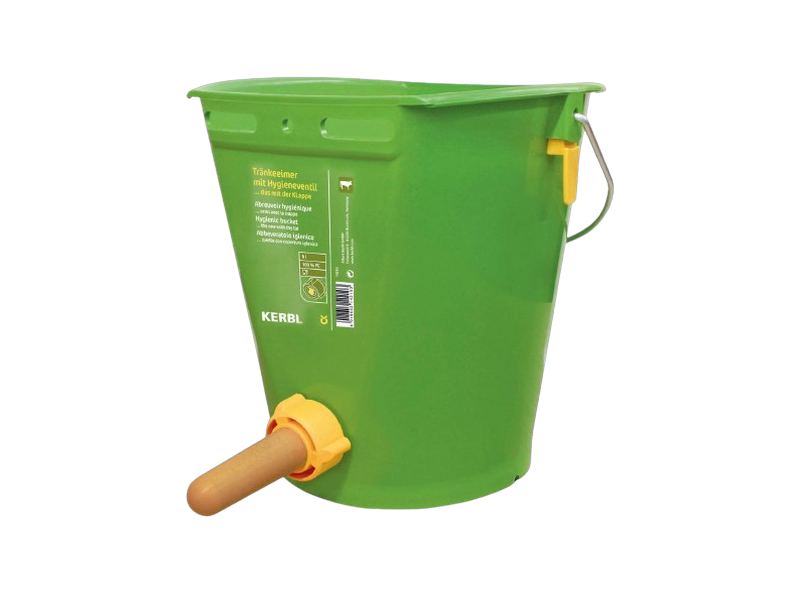
KERBL’s official calf-feeding guide recommends assigning a separate bucket to each calf and cleaning the bucket and teat regularly. This reduces transfer between animals and makes equipment condition visible. Bucket identification, valve disassembly, immediate rinsing, drying and teat inspection belong in one work instruction.
Flow depends on teat type and condition. Openings should not be enlarged by guesswork; worn or damaged teats are replaced according to the farm procedure. Group systems also require checks of access, height, mounting and cleanability.
How to configure a KERBL calf kit in Uzbekistan
A small calf unit may need colostrum assessment tools, bottles, individual buckets, spare teats, a thermometer, heater, identification and a drying area. Larger herds may add a mobile vessel, group feeders, hutches or boxes and more formal records. The right scope depends on calves by age, milk source, feeding frequency, route length, water, power and wash area.
LabLog does not promise that every item in KERBL’s global catalogue is locally stocked. We review the farm workflow in Uzbekistan, separate repeat consumables from project items and configure a compatible kit without publishing a misleading generic price.
- Calf numbers and feeding programme
- Milk source, route, water and power
- Cleaning, drying, identification and consumable stock
FAQ
FAQ
Why should each calf have a separate bucket?+
An identified individual bucket simplifies cleaning control and reduces transfer between animals. The teat and valve still require cleaning and drying.
Where should milk temperature be checked?+
Check not only after heating but also at delivery, including the last group on the route. The farm specialist approves target values for the programme.
What belongs in a KERBL calf-feeding kit?+
The kit may include colostrum assessment, bottles, buckets, teats, heater, thermometer, identification, drying, feeders and housing components. Final scope follows the farm process.
Where can KERBL be ordered in Uzbekistan?+
LabLog Group is the official KERBL distributor in Uzbekistan and supports kit selection, availability checks, supply and repeat consumable orders.
Sources and documents