
KERBL · Individual calf feeding
KERBL calf feeding buckets
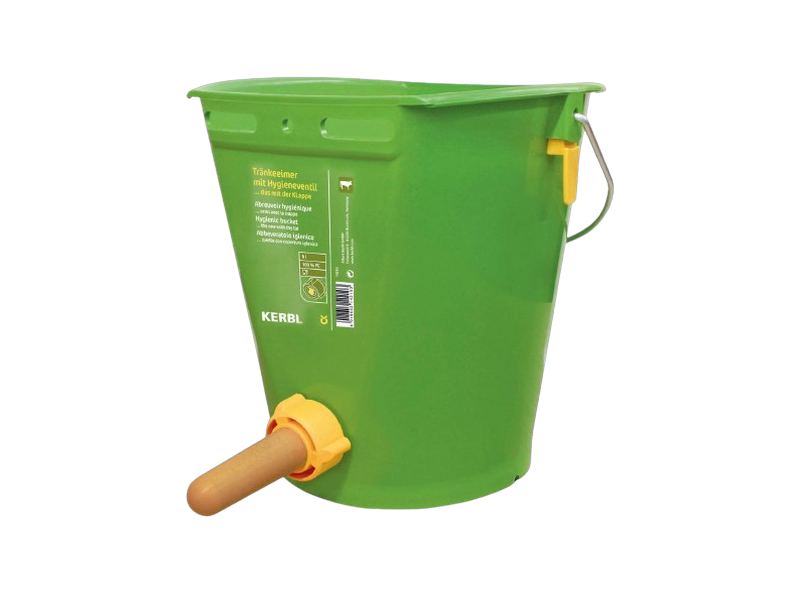
Two practical 8 L options: grey bucket 144 with Super-Teat and screw valve, and green bucket 14210 with a latex teat and hygienic valve.

Quick decision
Is this solution right for your farm?
Consider it when
Controlled individual feeding on dairy and beef farms
We clarify before quoting
Herd size, operating zone and housing method, daily load, dimensions and routes, water, power, cleaning and service.
Another solution may be better when
Animal group, layout, capacity, operating method or site utilities differ.
Best suited for
Controlled individual feeding on dairy and beef farms
Capabilities and controlled parameters
- Both models have an 8 L capacity, measuring scale and metal handle
- Ref. 144: grey acid-resistant bucket, Super-Teat and screw valve
- Ref. 14210: green acid-resistant bucket, latex teat and hygienic valve
- Compatible accessories include covers 1441 and 14211, brackets 1410/2 and Bucket Guard 1407
- KERBL recommends assigning one bucket to each calf and routinely cleaning the bucket, valve and teat
Specifications have been checked against the official manufacturer page.
Official KERBL product pageKERBL · model catalogue
Feeding buckets by reference
Products are organised by purpose and reference so you can compare specifications and assemble a compatible calf-unit set.
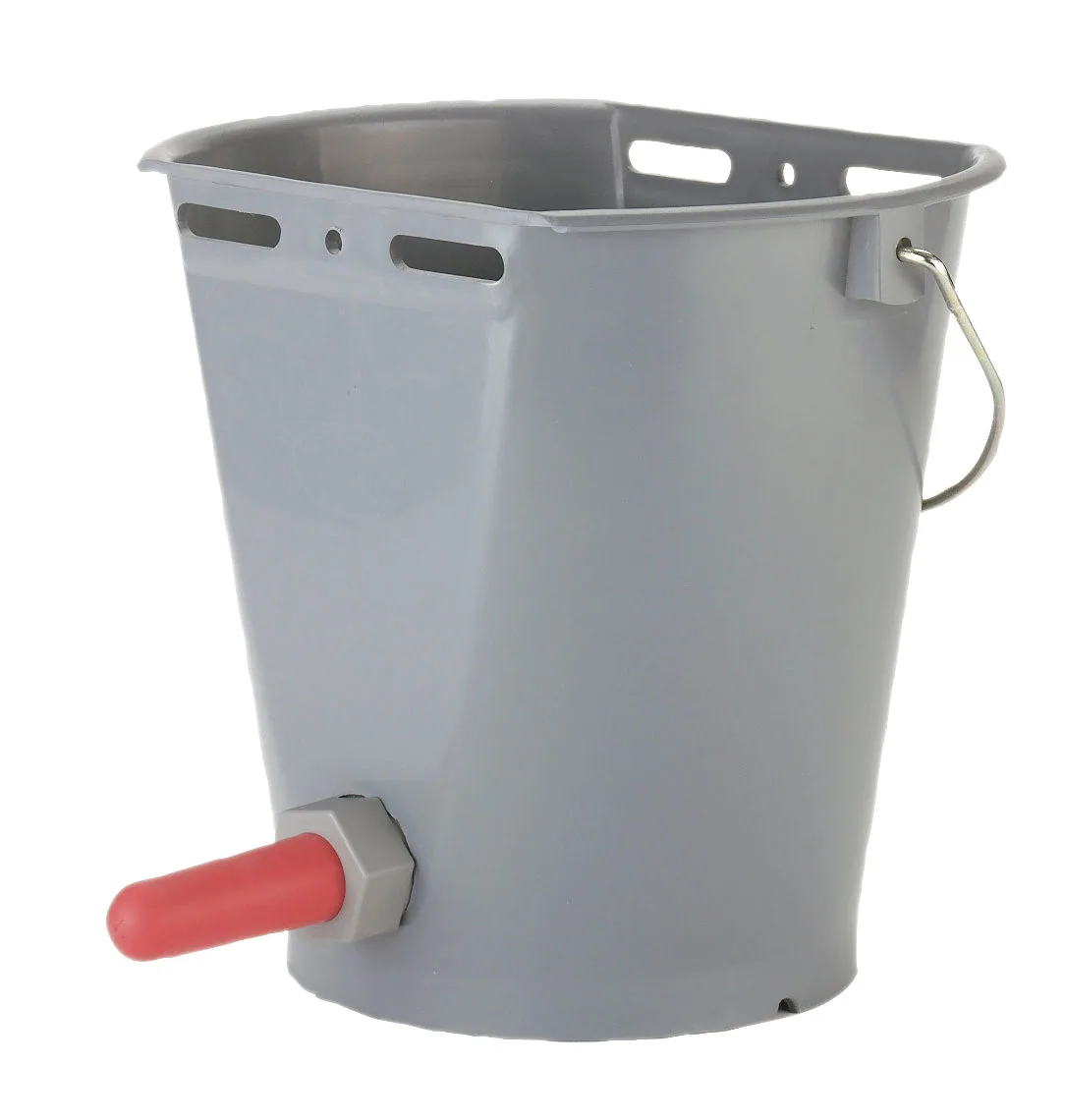 8 L bucket with screw valveKERBL calf feeding bucket — 144Grey bucket for individual calf feeding, supplied with a Super-Teat and screw valve. The measuring scale helps control the prepared volume.Learn More 8 L bucket with hygienic valveKERBL hygienic feeding bucket — 14210Green bucket with latex teat, quick-release bayonet fitting and hinged hygienic valve. The design simplifies disassembly, cleaning and drying after feeding.Learn More
 KERBL
Go deeper
Guidance on farm layout, operation and equipment selection.
LabLog
Implementation considerations
Implementation starts with site measurements, the operating route and daily load. LabLog coordinates the model with layout, animals, utilities, cleaning, operator safety, installation and service access.
How LabLog supports the project
- 01Capture site, animal and operating-cycle data
- 02Check dimensions, routes and utility connections
- 03Agree the model, options and supply boundaries
- 04Prepare installation, commissioning and operator training
- 05Define maintenance and spare-parts needs