
Rosensteiner · Rollover crush for professional hoof trimmers
Rosensteiner RS-Q
A hydraulic rollover crush for professional trimmers serving multiple farms. Fully hydraulic restraint — belly band, leg lift, and capture are controlled from a single panel. From animal entry to all four hooves in working position takes approximately 30 seconds.
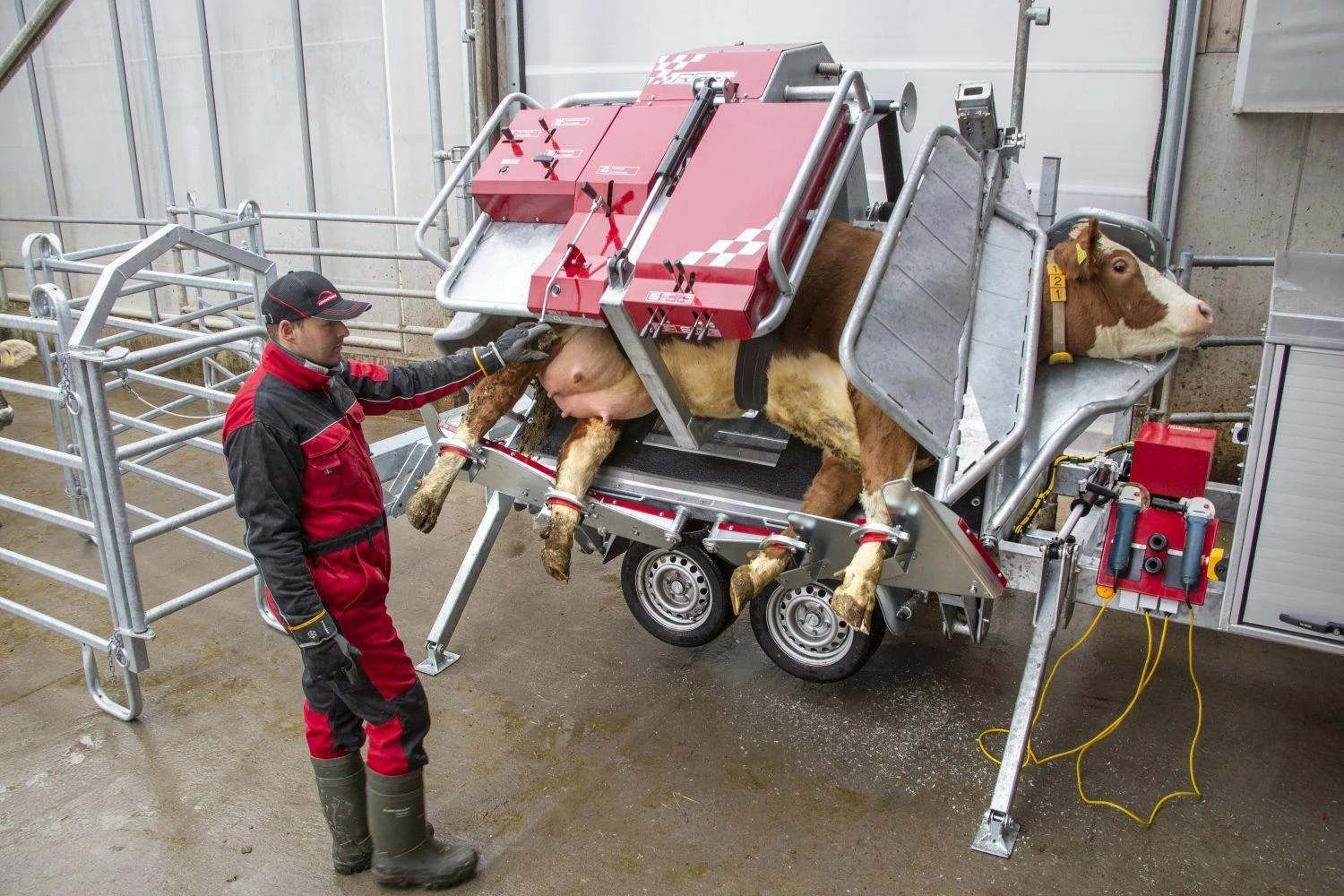

Quick decision
Is this model right for your farm?
Consider it when
Professional hoof trimmers, veterinary services, large complexes with bulls and beef cattle
We clarify before quoting
Animal type, weight and behaviour, case volume, layout, power supply, mobility and service requirements.
Another model may be better when
Restraint method, cattle throughput, transport frequency, available space or the actual task differs: trimming, treatment, cattle flow or cubicle maintenance.
Best suited for
Professional hoof trimmers, veterinary services, large complexes with bulls and beef cattle
Design and verified specifications
- Recommended animal weight: 450–1100 kg (including bulls)
- Space requirements: 5000 x 4000 mm
- Crush weight: approximately 1200 kg
- Power supply: 400 V, 50 Hz; high-quality hydraulic power unit
- Fully hydraulic restraint: belly band, capture, and leg lift controlled from a single panel
- Auto-adjusting belt system sized to each animal
- All four legs secured in under 10 seconds; animal exit in approximately 15 seconds
- Hot-dip galvanised and powder-coated; Cat II three-point hitch; mobile transport cart version available
Specifications have been checked against the official manufacturer page.
Official Rosensteiner product pageRosensteiner
Go deeper
A current guide to the Rosensteiner range, safer restraint, workstation planning and model selection.
LabLog
Implementation considerations
Final configuration depends on animal type and weight, daily throughput, restraint method, workstation layout, power supply and transport needs. LabLog matches these inputs to the current model version and its official drawing.
How LabLog supports the project
- 01Capture animal, throughput and task requirements
- 02Compare models, versions, drives and options
- 03Review the site, cattle approach, power and washdown
- 04Arrange supply, installation and commissioning
- 05Train operators in normal and emergency procedures