
New brand and method
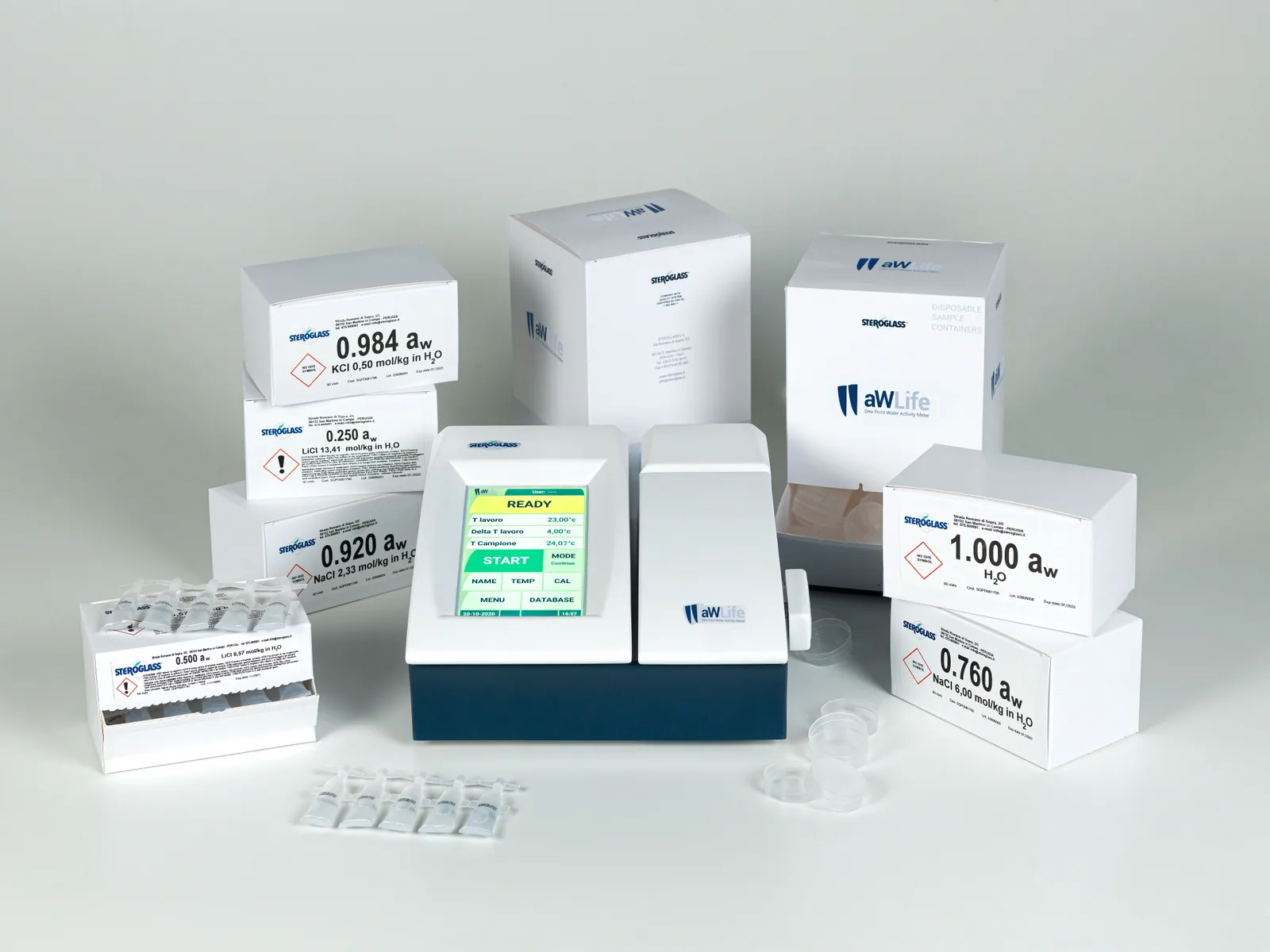
Water activity: what aW reveals and how Steroglass aWLife works
Two products with the same moisture content can differ in shelf stability, caking and support of microbial growth because not all water is equally available. Water activity is therefore used in formulation, HACCP and shelf-life studies. It is not a stand-alone spoilage forecast: aW must be interpreted with pH, composition, temperature, packaging and validation data.
In short
Moisture and aW answer different questions
Moisture content says how much water a sample contains. aW is the ratio of water-vapour pressure above the product to that above pure water at the same temperature. Salt, sugar, proteins and matrix structure bind water differently. Below aW 0.60, microbial growth is generally not supported, but this is not a guarantee of safety: chemical change, oxidation and later moisture uptake still matter.
How aWLife measures the dew point
The sample equilibrates with the headspace in a sealed chamber. A mirror is cooled, optics detect condensation, and aW is calculated from dew-point and sample temperatures. aWLife covers 0.030–1.000 aW with ±0.003 aW accuracy at 25 °C and ±0.001 aW repeatability. Typical time is below five minutes, but matrix behaviour and equilibration affect the cycle.
Building a repeatable aW method
Use representative samples and keep grinding, fill volume and temperature consistent. Do not leave a sample open because it exchanges moisture with room air. Before a batch, check the instrument with a suitable aW standard and bracket the working range with calibration points. For a new matrix, evaluate repeatability and uncertainty near the specification limit.
- Consistent sampling and preparation
- Defined temperature and equilibrium criterion
- Control standard and result log
What ISO 18787 means
ISO 18787:2017 describes the dew-point method for foodstuffs. An aWLife procedure can be structured in line with it, but the instrument itself is not “ISO accredited”. Frozen samples, water-in-fat emulsions, matrices with sugar, salt or mineral crystals, and volatile components such as alcohol require specific assessment.
Where aW supports decisions
In dry mixes, spices, grain and feed, aW helps assess caking and moisture uptake. In meat, dairy, confectionery and prepared foods, it complements pH, salt, preservatives, heat treatment and packaging. In pharmaceuticals and cosmetics, aW may contribute to a study, but the acceptance criterion comes from the applicable method, not a universal table.
What else is in the Steroglass range
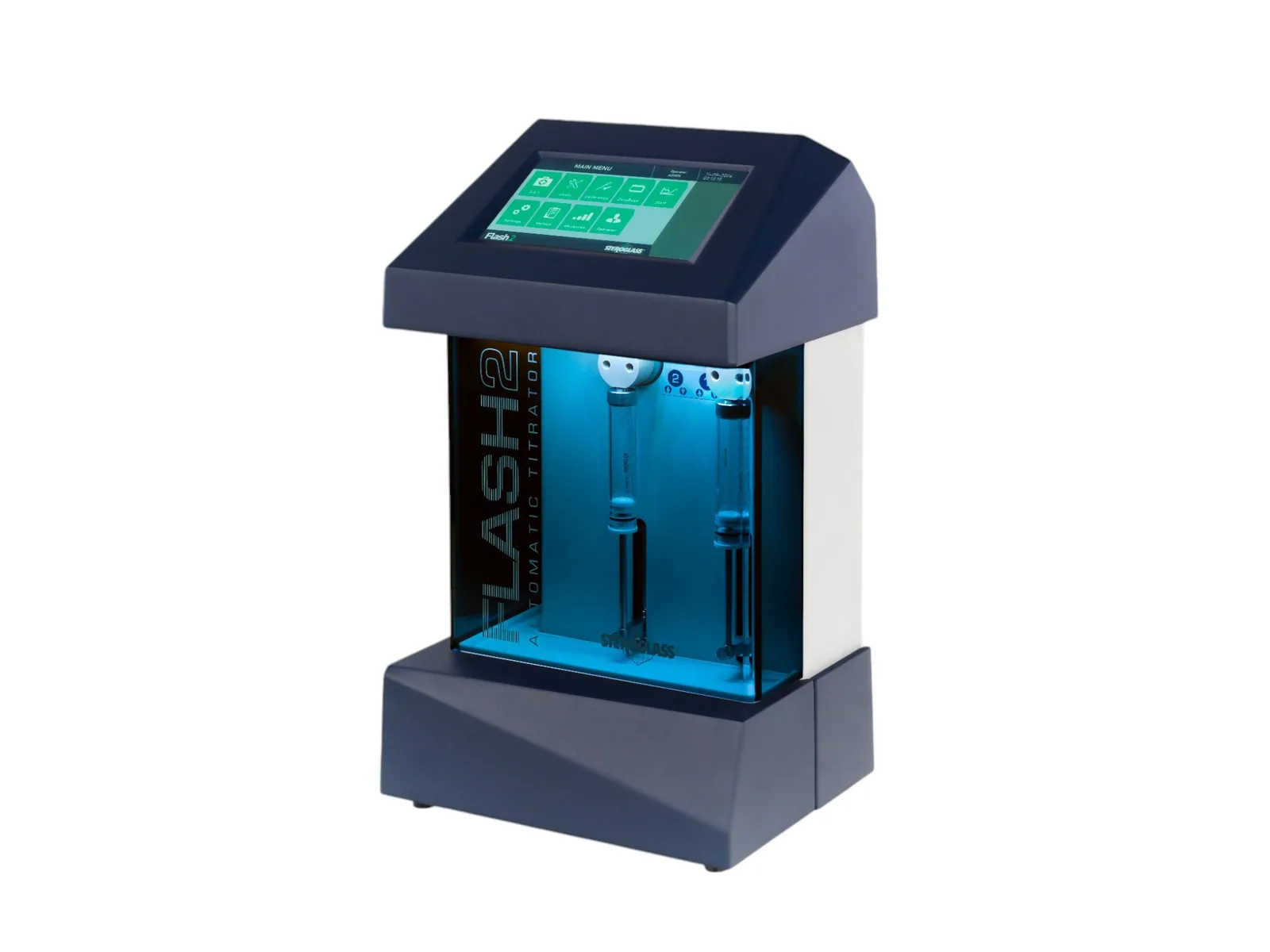
Flash2 automates titration and AS Plus presents sample batches. Hyperlab Smart uses disposable cuvettes, Basic includes washing, and Plus targets high throughput and random access. Reagent kits define the assay panel. EasyCheck assesses wine stability and Alcodens determines alcohol by volume. Selection starts with analyte, matrix, reference method and sample flow.
FAQ
FAQ
How does aW differ from moisture?+
Moisture is the amount of water; aW is its thermodynamic availability. Equal moisture does not guarantee equal aW.
Will aWLife predict an exact shelf life?+
No. Shelf life is established with pH, composition, processing, packaging, storage and validation studies.
What does aW below 0.60 mean?+
Microbial growth is generally not supported, but viable organisms, toxins and chemical change may still matter.
Can aWLife measure every matrix?+
Not without assessment. Frozen, emulsion, crystalline or volatile matrices may need a special procedure.
How do I choose Hyperlab Smart, Basic or Plus?+
Smart suits moderate throughput and disposable cuvettes, Basic a routine panel with washing, and Plus a high mixed workload. Methods, samples, reagents and maintenance decide.
Sources and documents