
KERBL product focus
KERBATEST 1514: rapid quarter-level udder screening on farm
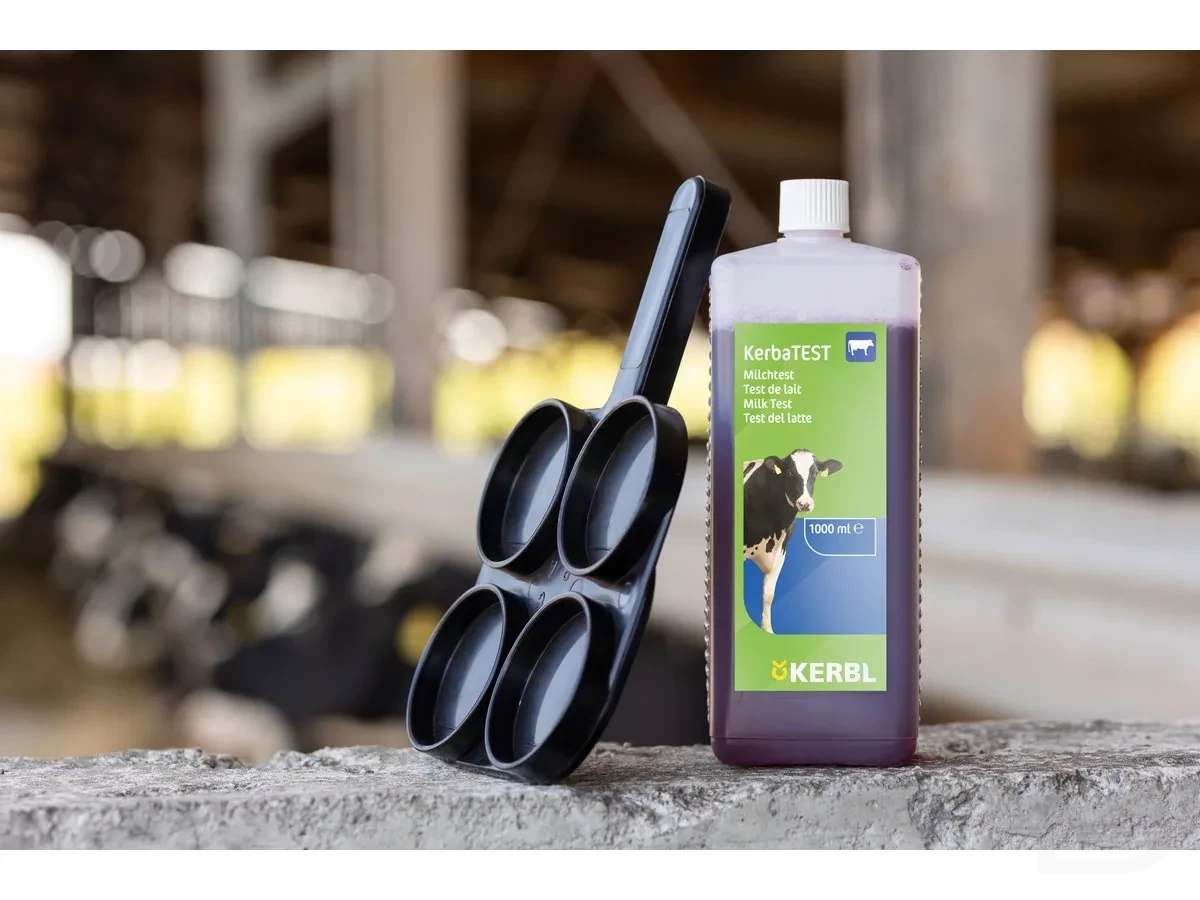
KERBATEST is KERBL’s reagent for the California Mastitis Test (CMT). The test is performed before milking and separately for each udder quarter. It helps operators quickly identify signs of elevated somatic cell content and select samples that require laboratory or bacteriological confirmation.

In short
What KERBATEST actually shows
The reagent disrupts somatic cells in the milk sample, and the released cellular material changes the mixture’s viscosity. More visible streaking or gel formation indicates a higher approximate cell-content category. This is a semi-quantitative cow-side assessment: it does not provide an instrument cell count or the cause of inflammation.
A concise testing workflow
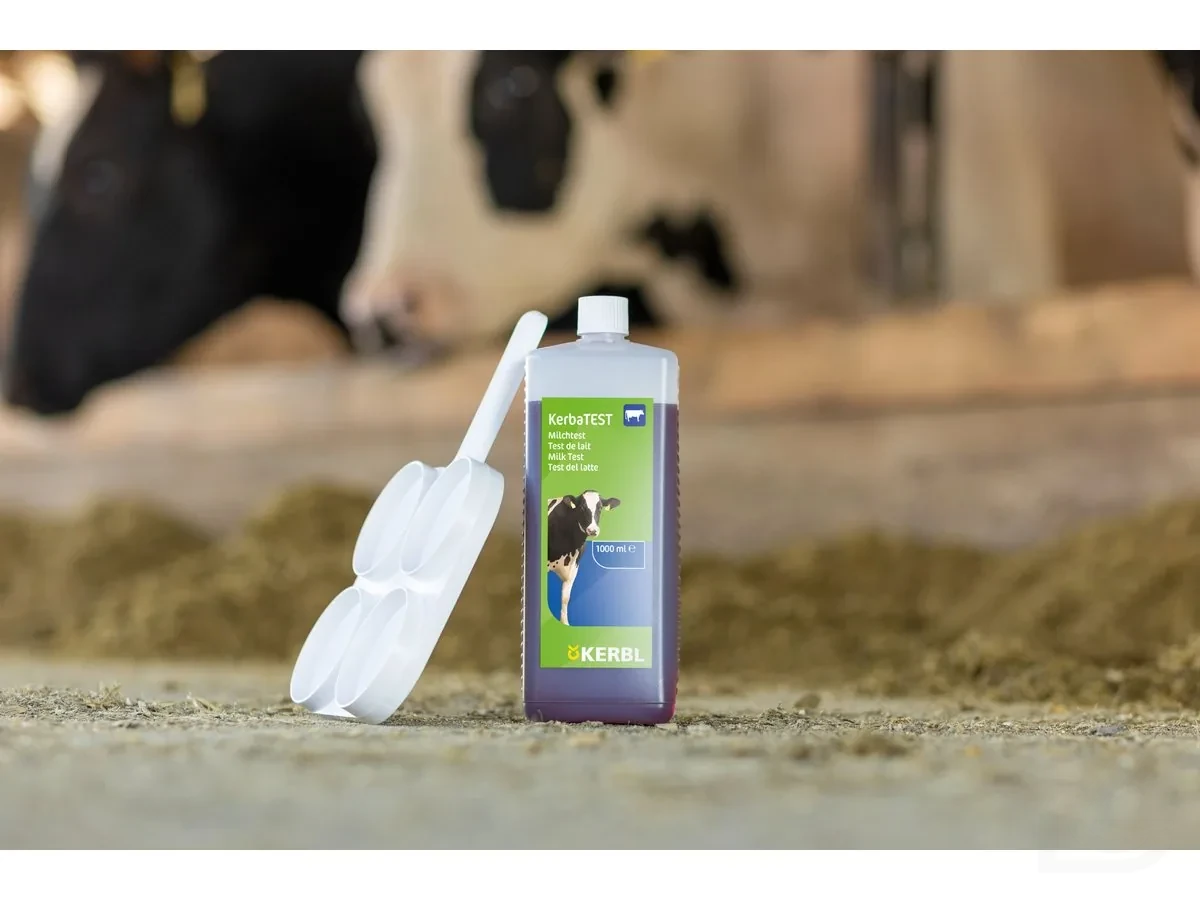
Test before milking. Discard the first three streams into a foremilk cup, then place milk from each quarter in its corresponding paddle well. Pour off the excess to the mark, add a comparable volume of KERBATEST and rotate the paddle slowly. Read the reaction immediately and rinse the paddle with water after use.
When confirmatory testing is needed
A clear or strong reaction is a reason to reassess milk from the corresponding quarter and follow the farm’s veterinary protocol. An exact somatic cell count requires a laboratory method, while treatment decisions require investigation of the cause, for example bacteriological testing. CMT alone should not determine therapy.
Supply and configuration through LabLog
LabLog’s documented range includes KERBATEST 1514 in a 1 L bottle. A four-well test paddle is also required for a working kit. Before ordering, we verify the reference and configuration and estimate reagent use from herd size and the farm’s screening frequency.
FAQ
FAQ
Does KERBATEST diagnose mastitis?+
It identifies a reaction associated with elevated somatic cell content and helps locate a suspect udder quarter. Additional methods are needed to determine the cause, and a veterinary professional makes the clinical decision.
Does it provide an exact somatic cell count?+
No. It is a semi-quantitative interpretation of thickening. An exact count requires a laboratory or validated instrument method.
What is reference 1514?+
It is a 1 L bottle of KERBATEST reagent. The test paddle is a separate accessory.
Sources and documents