
Milk safety
Bioeasy 4in1 or 16in1: choosing a test, incubator and Reader
Bioeasy 4in1 BSCT and 16in1 should not be selected by the number on the pack alone. Start with the decision the result must support: returning milk from a treated cow to the common tank, accepting an incoming lot or running broader laboratory screening. Then match the medicines actually used, the milk buyer’s requirements, sample flow and documentation needs. The incubator provides defined reaction conditions, while a Reader is useful where digital interpretation and stored records matter. A rapid test remains a screening method: disputed or non-compliant results follow the site procedure and, where required, a reference confirmation method.

In short
4in1 BSCT for targeted routine control
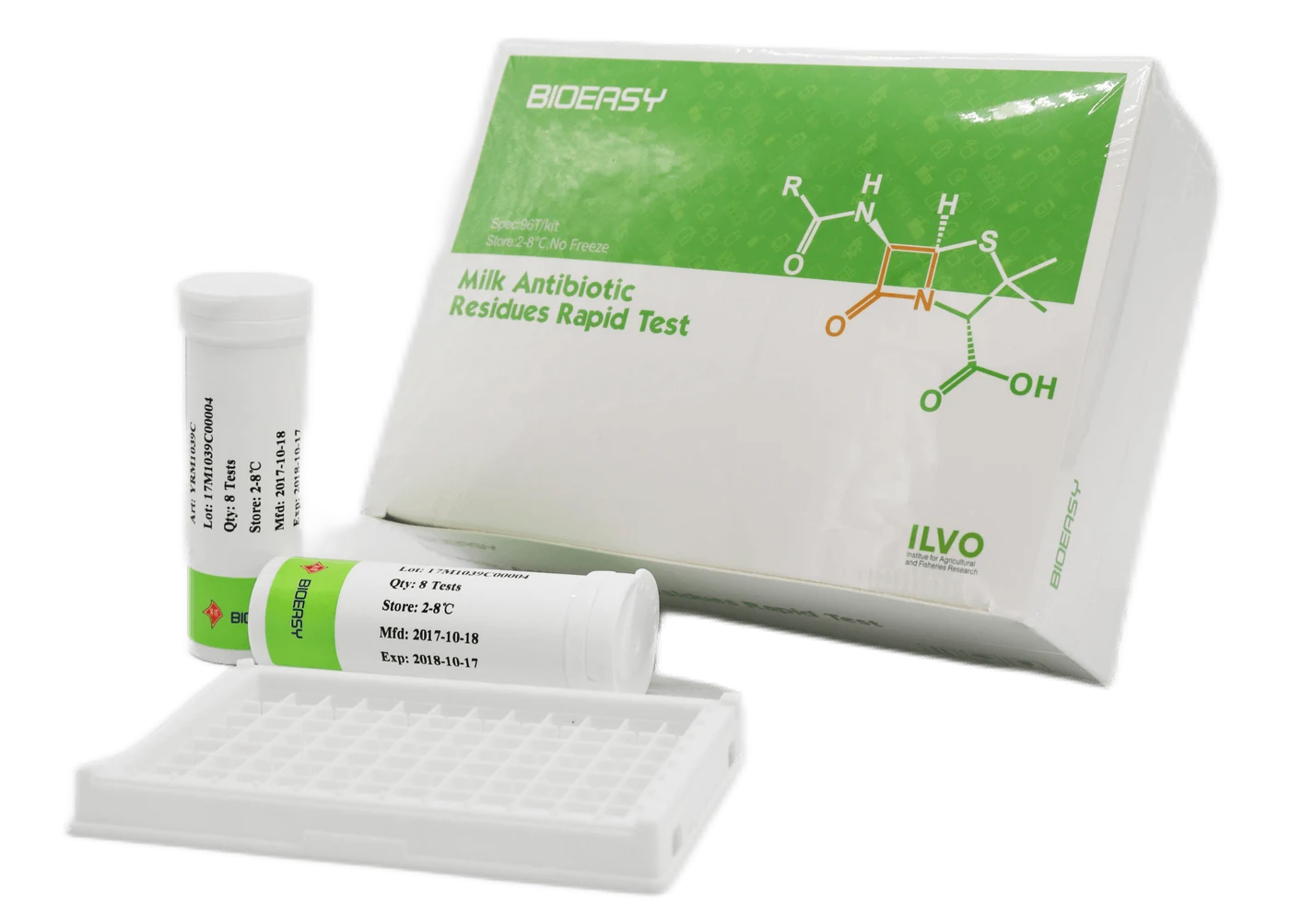
The 4in1 BSCT format simultaneously screens beta-lactams, streptomycin, chloramphenicol and tetracyclines. It is a practical scope for post-treatment checks on a farm and for baseline intake screening when these risks match the medicines register and reception requirements. Bioeasy’s 2020 catalogue describes two incubation stages at 40 ± 2 °C and about 12 minutes total for that test edition. The package insert for the current lot always governs: time, temperature, sample volume and line interpretation may depend on the catalogue number and kit version.
16in1 for broader screening
Bioeasy 16in1 is used when a site wants one procedure to cover a wider set of antibiotic and veterinary-drug groups. This format is more logical for a dairy plant, a larger collection point or a laboratory receiving milk from suppliers with different treatment practices. The number “16” alone does not prove fitness for a particular decision: obtain the current analyte and detection-limit table before ordering, then compare it with applicable limits and the medicines actually used. A broad test does not remove the need for a targeted assay when the required substance, sensitivity or matrix is outside its specification.
The incubator is part of the method
Lateral-flow reactions depend on temperature and time. Tests whose instructions require incubation must not be run on an improvised heater or judged using approximate timing. The Bioeasy Portable Incubator EASY-2T manual specifies a 20–55 °C setting range, ±1 °C temperature-control accuracy, six test-card channels and separate test-cup chambers; cups require an external timer. The incubator model must match the consumable format and current test instructions, and the temperature must stabilise before testing starts.
When a Reader adds value
Visual reading is suitable only when the test instructions explicitly permit it and lines can be assessed under a defined interpretation scheme. A Reader adds value with high sample flow, faint lines, multiple analytes, shift work and traceability requirements. Depending on configuration it reduces subjective interpretation, stores or exports data and supports one consistent decision rule. It cannot correct poor sampling, an expired test, incorrect incubation or contamination: a digital value does not make a broken procedure reliable.
Workflow from sample to decision
Before testing, record the sample source and identifier, sampling time, animal or supplier, medicines used and test-lot number. Mix milk to homogeneity without vigorous foaming, then dose and incubate exactly as specified in the current instructions. Classify the result as valid negative, valid non-negative or invalid according to the control line and the specific test diagram. Define the action for each class in advance: release, hold, repeat from a fresh aliquot or send for confirmation. The decision rule must not be changed after the result is seen.
- link each sample to the treatment record, animal or supplier
- control storage and expiry for every test lot
- use an accurate pipette, timer and compatible incubator
- predefine repeat, hold and confirmation actions
How to configure the kit for each site
For an individual farm, a common starting point may be 4in1 BSCT, a compatible incubator, pipette, timer and result log. A collection point also needs supplier rules, control materials and enough consumables for peak intake. A dairy plant or laboratory more often needs 16in1 or a combination of broad and targeted tests, a Reader, operator identification and result export. Final configuration follows a short audit: medicines used, samples per shift, decision owner, required limits and the handling of a non-negative sample.
What to verify before ordering
Request the exact kit name and catalogue number, analyte list, detection limits for every substance, matrix, time and temperature, visual or instrument reading format, shelf life and storage conditions. Separately agree test quantity, compatible incubator model, Reader format, consumables, training and quality-control procedure. LabLog records these points in the supply specification and supports operator training in Uzbekistan. This is more reliable than applying an old brochure specification to a new lot without verification.
FAQ
FAQ
Which is better: Bioeasy 4in1 or 16in1?+
Neither is universally better. 4in1 supports targeted routine control of four groups, while 16in1 provides broader screening. Select by medicines used, required limits, matrix and intake rules.
Can a Bioeasy test be run without an incubator?+
When the kit instructions specify incubation, a compatible temperature-controlled incubator and accurate timing are required. An improvised heater or room temperature changes the method conditions.
Is a Bioeasy Reader mandatory?+
Not for every format or user. It is particularly useful with high throughput, multiple analytes and recordkeeping requirements. Check the specific test instructions to confirm whether visual reading is permitted.
Does a positive rapid test show antibiotic concentration?+
A qualitative screen generally indicates whether the method threshold for a line has been crossed; it does not provide a confirmed concentration of a specific substance. Repeat and confirmation rules should be documented in the site procedure.
What information does LabLog need to configure a kit?+
Provide the site type, medicines used, matrix, samples per shift, buyer or laboratory requirements, recordkeeping method and the action required for a non-negative sample.
Sources and documents