
Cheese and dairy
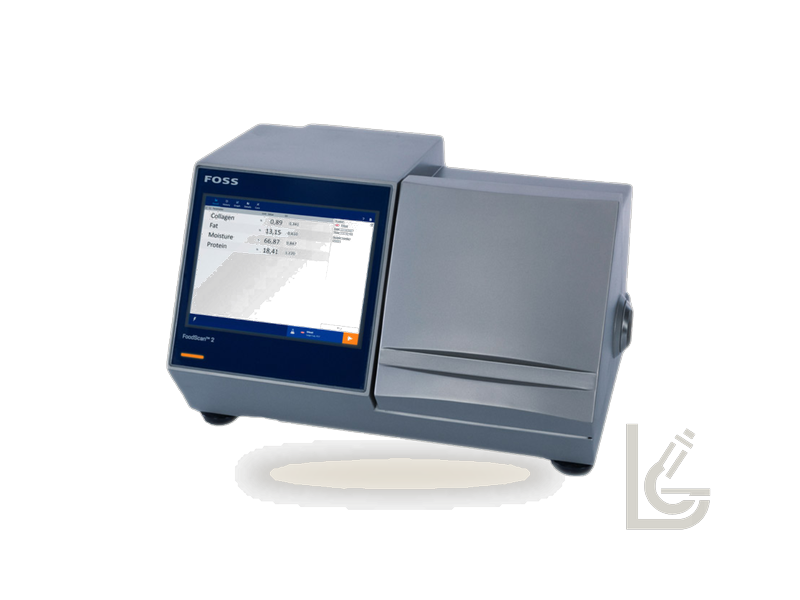
FoodScan 2 Cheese: control of cheese and solid dairy products
In cheese and solid dairy products, an error in moisture, fat or salt quickly becomes a yield, taste, texture and labelling issue. That makes routine rapid analysis especially valuable.

What is controlled in cheese
Key parameters depend on the product: moisture, fat, protein, salt, total solids, solids-non-fat and calculated values. Correct matrix-specific calibration matters for different cheeses, butter, spreads, curd, yoghurt and other dairy products.
Composition plus colour and process stability
In the official FOSS approach, FoodScan 2 Dairy / Cheese can support not only composition control but also CIE L*a*b colour measurement. For cheese, this matters because small changes in moisture, salt, fat or colour quickly affect texture, yield, taste and batch repeatability.
Why rapid analysis matters
Rapid control helps detect deviation earlier, adjust the process, keep yield stable and avoid waiting for long reference methods at every production decision point.
FoodScan or NIRS
If the laboratory focuses on cheese and solid dairy products, FoodScan 2 Dairy / Cheese is convenient as a dedicated solution. If feed, grain, meat or a broader set of food matrices must also be covered, compare it with NIRS DS3 and additional calibration packages.
Standards and method confirmation
For NIR analysis of food matrices, ISO 12099 and GOST ISO 12099-2017 provide the methodological basis: calibration, suitability checks, repeatability control and connection with reference methods. For a plant, the practical point is simple: the instrument must be not only fast, but built into a clear laboratory procedure.
Curd, cheese and finished product are different matrices
FoodScan 2 Dairy supports cheese, butter, spreads and fermented products with suitable calibrations. Curd, young cheese and mature cheese are not automatically one matrix: structure and moisture and salt distribution change during processing.
Standardise sampling and preparation for every control point. Minimal preparation of certain irregular samples speeds up testing, but batch representativeness still depends on the sampling plan.
Composition and colour in one workflow
Official calibration packages cover fat, moisture, protein, salt, total solids and calculated values; confirm availability for the selected configuration. CIE L*a*b* colour measurement can monitor appearance consistency alongside composition.
A result must lead to a process action: adjustment of syneresis, salting, formulation or process time. The plant defines limits by product and verified method.
Method verification before release
Before routine release, select samples across the working range: recipes, seasons, moisture, fat and maturation stages. Compare them with accepted reference methods, assess bias and repeatability, then define controls and verification frequency.
A new cheese type or process change cannot rely on a similar product name alone. Confirm calibration suitability first.
FAQ
FAQ
Is FoodScan 2 Dairy / Cheese only for cheese?+
No. It is considered for cheese and other solid or semi-solid dairy products such as butter, spreads, curd, yoghurt, skyr and related matrices when suitable calibrations are available.
Must calibration be checked on the plant’s own cheese?+
Yes. Verification on local recipes and ranges against reference methods confirms that the model suits the actual product.
Sources and documents