
Grain and forage · Measurement practice
Grain and forage moisture: choosing a Wile meter and getting reliable results
When should drying stop? How do grain lots differ? What is happening inside a bale? A portable moisture meter brings measurements to the point of decision. Useful results begin with the right instrument, a representative sample and a consistent procedure. This guide explains Wile options for crop and livestock farms in Uzbekistan.

In short
Quick selection
Choose by task
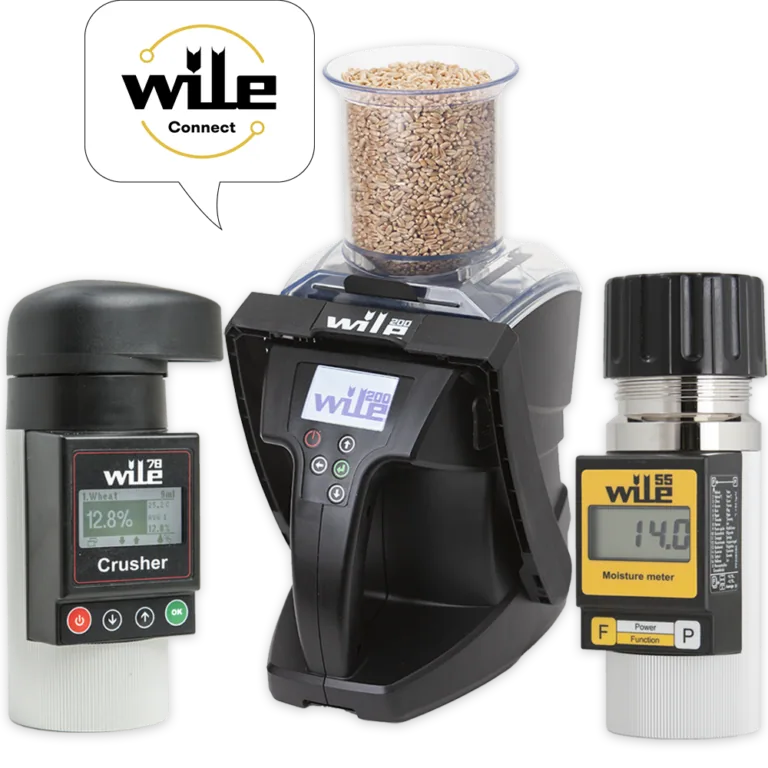
Wile 55
- Main task
- Rapid whole-grain moisture checks
- What to confirm
- Scale and sample preparation
Wile 78
- Main task
- Grain moisture with sample grinding
- What to confirm
- Scale and burr cleaning
Wile 200
- Main task
- Moisture, test weight and temperature
- What to confirm
- Chamber filling and software version
Wile 500 / 500-S
- Main task
- Baled forage moisture and temperature
- What to confirm
- Material, probe length and measurement locations
This table guides selection. Confirm scales and configuration availability separately.
Start with the decision you need to make
At a grain dryer, moisture trends are useful when sampling and preparation remain consistent. In storage, consider moisture alongside temperature and lot conditions. For baled forage, measurements must reach inside the material rather than describe its surface alone.
LabLog recommends recording the material, sampling location, comparison method and person responsible for the decision. Do not apply a single moisture threshold to every crop, forage type or storage condition. Define limits for the specific material and process.
Whole grain or grinding: Wile 55 and Wile 78
Wile 55 is a basic portable meter for rapid grain and seed moisture checks without pre-grinding. It suits routine work when moisture is the main measurement required.
Wile 78 grinds the sample with integrated burrs. The manufacturer specifies measurement in under 20 seconds; allow separately for preparation and cleaning. Grinding changes sample preparation but does not automatically make the result more accurate than every other method.
Compare the complete workflow: sampling, filling, measuring, cleaning and recording. Follow the burr-cleaning instructions for Wile 78. For both models, confirm the scale for your material and region.
Wile 200: three measurements from one sample
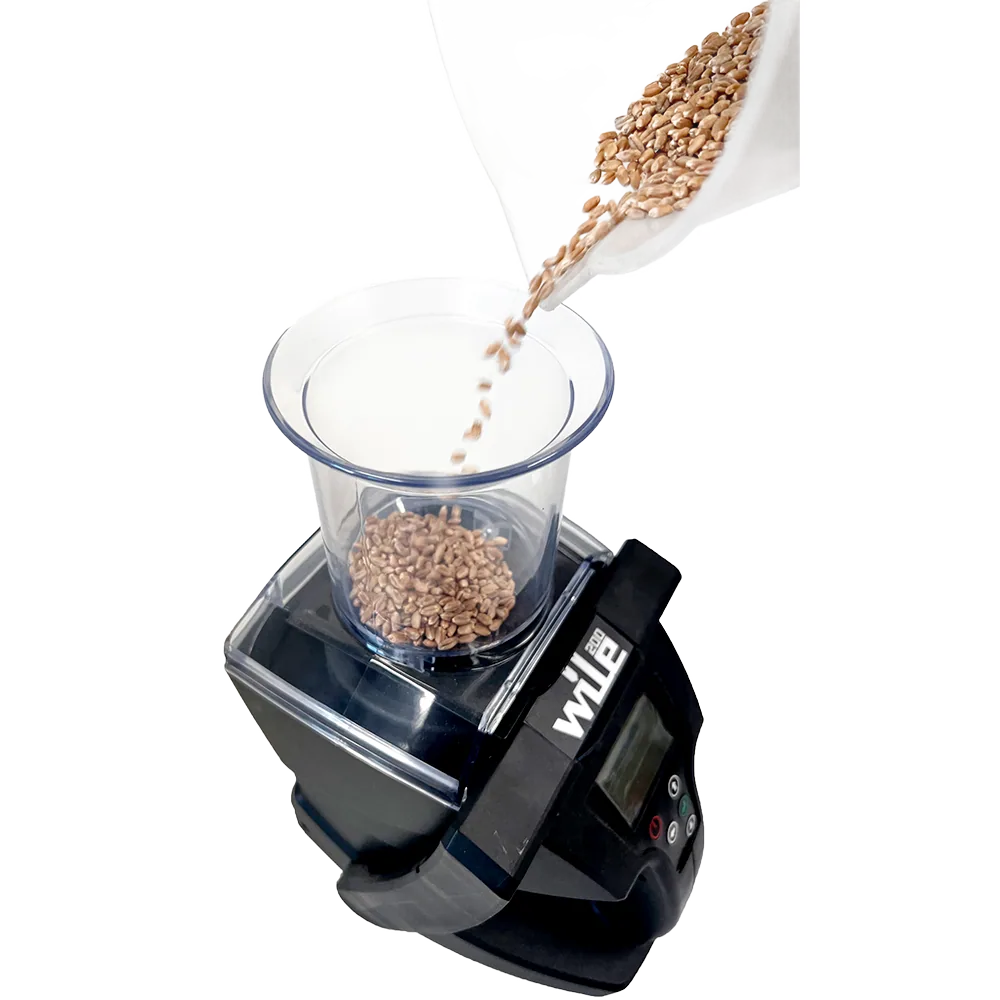
Wile 200 measures grain moisture, test weight and temperature. Test weight is the mass of a specified grain volume; it is a separate property, not a substitute for moisture. The manufacturer states results in as little as seven seconds.
The transparent filling unit and sample leveller help fill the chamber consistently. Consider this instrument for repeated checks of several properties without grinding between measurements.
The specified repeatability of ±0.3 percentage points applies to grain at storage moisture. It does not guarantee agreement with a laboratory within ±0.3 under all conditions. Verify the scale and results using your own samples.
Wile 500: measuring inside a bale
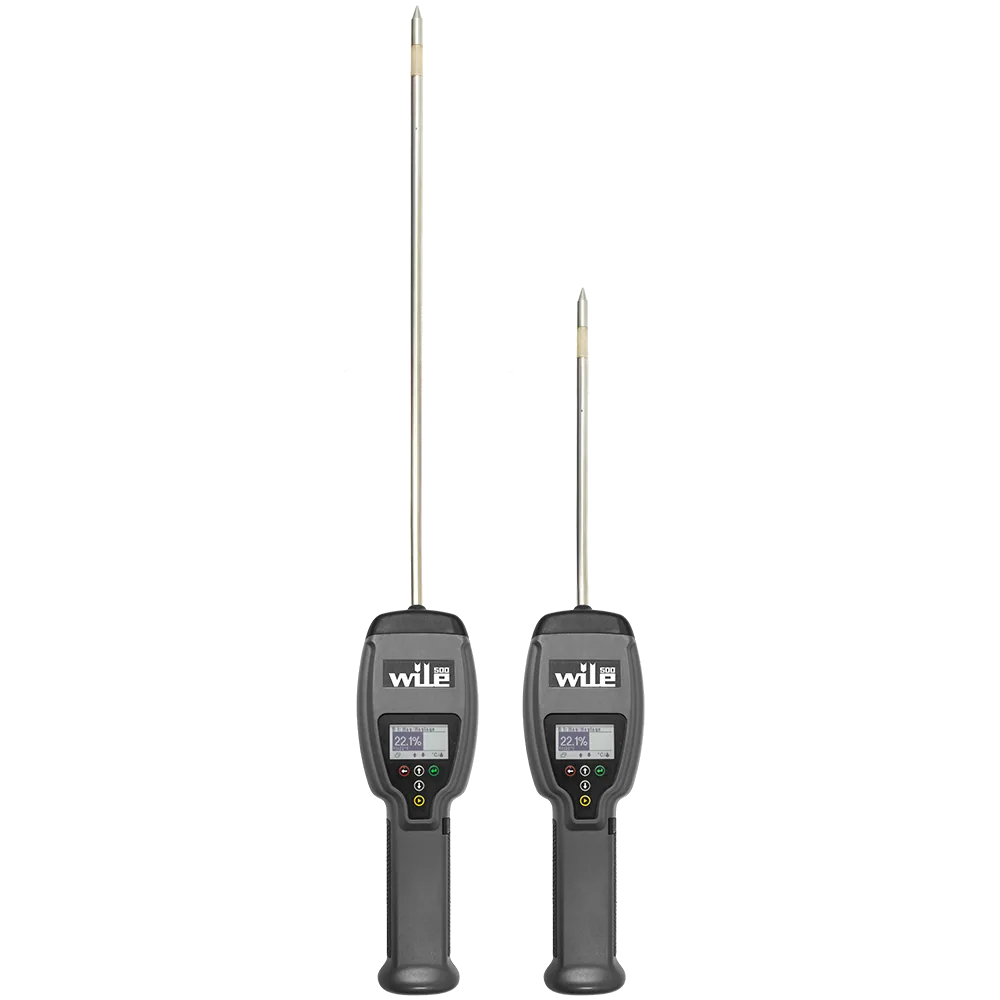
Hay and forage require a different form of contact with the material. Wile 500 is a probe instrument for moisture and temperature measurements in bales. Wile 500 has a 50 cm probe; 500-S has a 25 cm probe. The manufacturer lists automatic density compensation and storage for 1,000 readings.
Density compensation helps account for bale properties, but one insertion cannot represent an entire lot. LabLog recommends planning measurements across several bales and locations and retaining the spread of readings, not just the average. Recheck unusual results.
Choose probe length for the accessible depth and model instructions. Ranges depend on forage type: do not apply the overall instrument range to every material. Moisture and temperature do not replace testing for mould, mycotoxins, fermentation quality or nutritional value.
Why readings can differ
Repeatability describes agreement between repeated measurements under stated conditions. Agreement with a reference method is a different question: a stable reading can still be biased.
For grain, Wile recommends comparison with a laboratory result or receiving method rather than another rapid meter. Take several readings and use the average. Check at the start of harvest and when the variety or grain properties change; adjust only as instructed in the manual.
LabLog recommends checking sample identity, scale selection and preparation first when results differ. Do not adjust an instrument to match a single incidental reading. Record the original values and comparison conditions.
Wile Connect: from a reading to a lot history
Wile Connect transfers results through QR codes from a compatible meter, stores them on a phone and shares PDF or Excel reports. This helps link multiple readings to a lot and share them with colleagues.
Confirm compatibility for the specific model, hardware and software version. A USB connection alone does not imply QR transfer support. The app page lists cloud synchronisation and AI analytics as future features.
LabLog recommends logging the lot identifier, material, date, sampling location, instrument and series of readings. Transferring a number to an app does not validate sampling or calibration.
Before you measure
- Identify the material and appropriate scale.
- Take a representative sample using the farm’s sampling procedure.
- Check chamber or probe cleanliness, power and temperature conditions against the manual.
- Prepare and fill the instrument consistently.
- Take a series of readings; retain individual values and the average.
- Compare results with the process limit and reference check.
- Record the lot decision and responsible person.
What to prepare before selecting a meter
Tell LabLog the material, expected moisture, measurement location, daily sample count and laboratory comparison method. For forage, include bale type and accessible depth. If you need a digital log, specify report formats and confirm Wile Connect compatibility.
Wile 65 and Wile Cotton require separate consideration: confirm model status, application, scales and configuration before selection. A grain meter is not automatically suitable for cotton.
Manufacturer specifications do not establish metrological approval in Uzbekistan. Suitability for official control, documents and supply conditions must be verified for the particular model and task.
FAQ
FAQ
Can one meter measure grain, hay and cotton?+
Do not assume moisture meters are interchangeable. Measurement method, probe, scale and preparation must suit the material.
Does a moisture meter replace the laboratory?+
It supports rapid process checks. Retain the laboratory procedure for verification and tasks that require a reference method.
Is there one safe moisture level for every forage?+
No. Material, harvesting method, packaging and storage conditions matter. Set limits from the process, not the meter’s range.
Does every Wile 200 support Wile Connect?+
Check the specific hardware and software. The model name alone is insufficient.
Sources and documents