
Hygiena: essentials explained
How many microorganisms, and which ones? MicroSnap and PCR explained
Imagine two requests arriving at a laboratory. One asks for a count of indicator organisms. The other asks whether a particular pathogen is present. Both are microbiological questions, but they need different tests and decisions. Here is how to understand MicroSnap and PCR without taking a molecular-biology course.

In short
Quick selection
The essentials in one minute
ATP
- What matters
- How well was it cleaned?
MicroSnap
- What matters
- How many indicator organisms?
PCR
- What matters
- Was the genetic target detected?
Question first, method second
ATP testing helps assess cleaning. Indicator enumeration measures a defined aspect of microbial contamination. A targeted test looks for a specific target, such as Salmonella.
Think of three car checks: a clean body, a running engine and working brakes. Passing one does not replace the others. In production, choose methods according to the product, location, hazard and decision required. One negative test is not blanket approval to release a batch.
MicroSnap: from sampling to enumeration
MicroSnap is a family of indicator-organism tests, including Total, Coliform, E. coli and Enterobacteriaceae. Each has its own purpose and procedure.
Unlike a routine ATP swab, the workflow includes incubation in a specified growth medium. A subsequent bioluminogenic reaction provides a signal for a compatible instrument. Interpret results using the selected test’s procedure and working range. MicroSnap does not measure every possible bacterium or replace every pathogen test.
PCR: searching for a genetic target
PCR can be pictured as searching a large library for a particular passage. The assay targets a defined genetic sequence. Under suitable reaction conditions, that sequence is amplified and the system detects a signal.
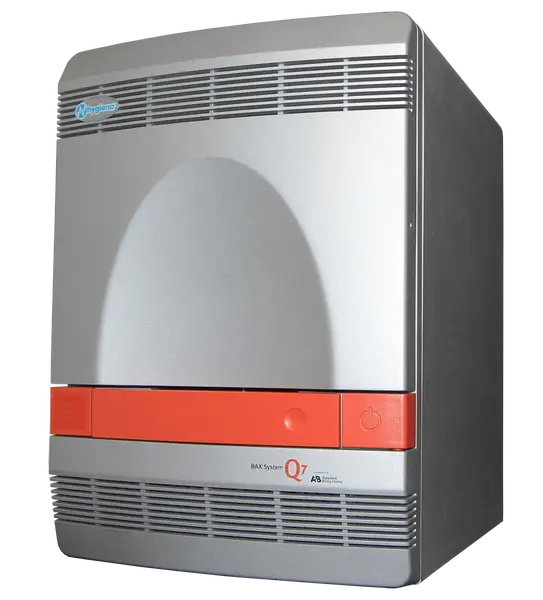
BAX System Q7 is one Hygiena platform for these tasks. The instrument is not the assay: the assay defines the target, applicable products and procedure. A Salmonella test cannot simply be used as a Listeria test. The appropriate reagents and method are required.
Why rapid does not always mean minutes
Count time from sampling to a result that supports a decision, not just instrument runtime. Food PCR often requires enrichment to increase target organisms before analysis. Sample preparation, amplification and control review follow.
MicroSnap also requires incubation. Hygiena describes results within 6–8 hours across the range, but the exact time depends on the test and procedure. A timing claim for one workflow cannot be applied to every product or method. LabLog reviews the whole analytical process and your laboratory conditions.
What detected and not detected actually mean
A positive signal requires action under the assay instructions and the site procedure, including confirmation where required. A negative result applies to the tested sample, sample size and method conditions. It does not prove absence in every pack in the batch.
A genetic signal alone is not a count of living cells. Enrichment, sample preparation and the assay’s intended use matter. If a reaction control indicates a problem, a negative result cannot be treated as reliable; investigate and follow the instructions.
Check that the method fits your laboratory
Validation asks whether a method’s performance is demonstrated for its stated use. Verification asks whether your laboratory can achieve the required performance locally. Selection requires more than an instrument name or certificate logo: review the assay, product matrix, sample size, preparation and instruction version.
LabLog helps select Hygiena systems, consumables and equipment and arranges commissioning and training. With the site team, we review workflows, documentation needs and technical questions. Start with a clear analytical task and a verifiable plan rather than expecting one instrument to replace the whole laboratory.
FAQ
FAQ
Is MicroSnap a routine ATP test?+
No. It includes incubation and a separate reaction to assess specified indicator organisms.
Can PCR be selected by instrument model alone?+
No. Check the assay, target, matrix, procedure and supporting documentation.
Sources and documents