
Hygiena: essentials explained
From individual tests to a food-production monitoring programme
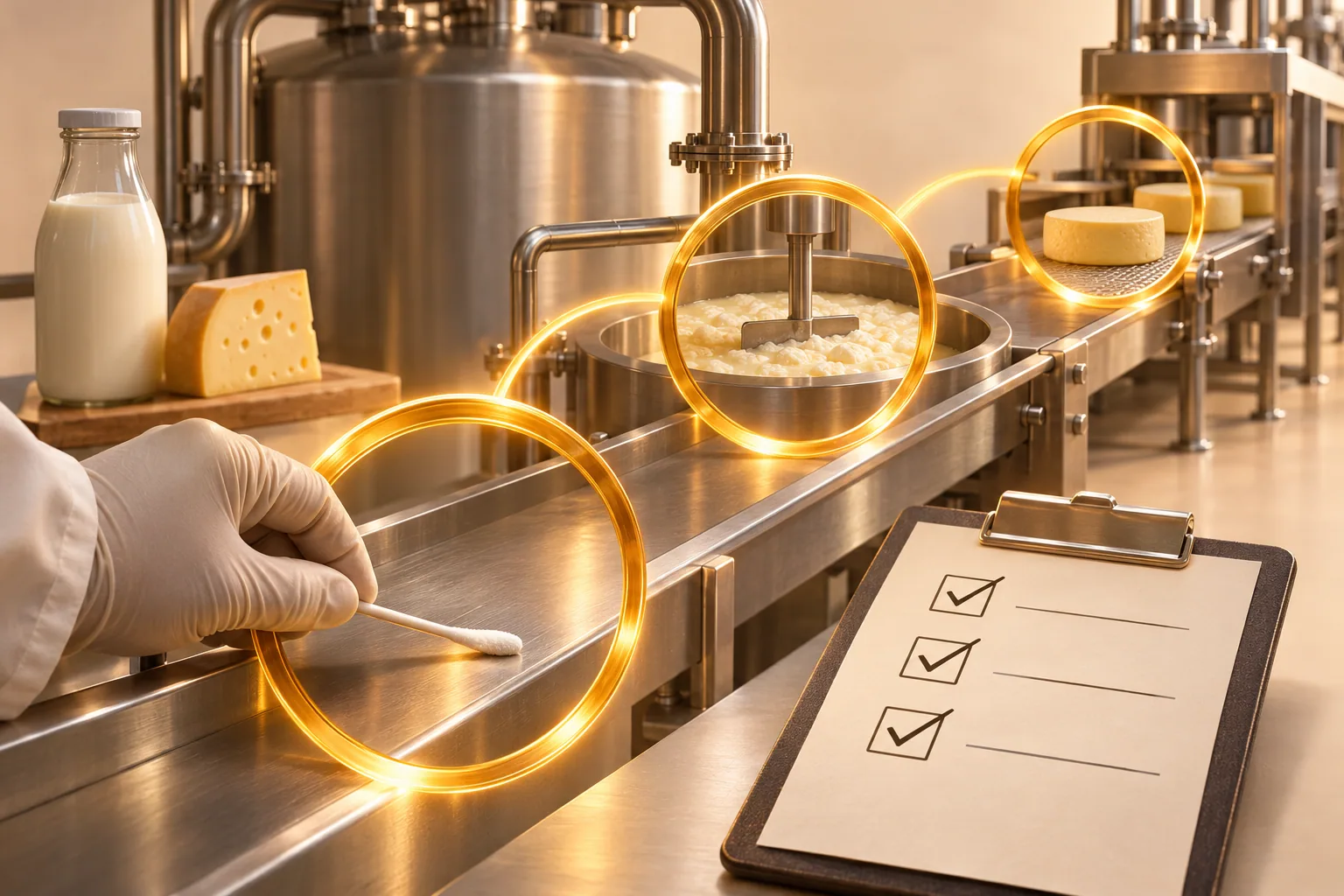
A site has instruments and tests. Measurements are taken and reports saved. But who decides what happens when a point fails? And why does the same area repeatedly need recleaning? A working programme connects each result to a responsible person and a clear action. Here is how to build that connection without unnecessary complexity.

In short
Quick selection
The essentials in one minute
Task
- What matters
- What decision is needed?
Check
- What matters
- Where, when and how?
Action
- What matters
- Who responds and how?
Start with the decision you need to make
“We want more tests” is not yet a defined task. “We want to verify cleaning before filling starts” is. That task can have sampling points, timing, criteria and an owner.
Begin with straightforward questions: what do you make, where is product exposed, which steps reduce microbial load, how is equipment cleaned and what has gone wrong before? Identify in-house tests and work sent to external laboratories. The aim is to strengthen existing control without unnecessary duplication.
One point, one clear record
For each point, record its location, method, sampling procedure, frequency, acceptance criterion and corrective action. Assign both the sampler and the person authorizing further operation.
For example: “Valve seal after cleaning; ATP test; consistent area and technique; limits established for this point; failure means recleaning and retesting before clearance.” A clear record lets different shifts follow the same process. Limits, area and frequency must be set for the actual site, not copied from an illustrative example.
Dairy: distinguish equipment from product
Training example: a site fills pasteurized milk. After cleaning, selected accessible surfaces are checked; water samples require the appropriate test and procedure. Raw material, process and finished-product microbiology remain separate. A low surface ATP reading does not replace those analyses.
Shelf-stable products may need a different workflow. Innovate supports commercial-sterility testing of suitable products and includes method-specific incubation. It is a separate process, not a seconds-long check for any pack of milk. Selection depends on the product and release programme.
Meat processing: follow the product flow
Another training example is a ready-to-eat area. Consider food-contact surfaces, adjacent zones and movement of people and tools. Choose points according to contamination-transfer risk, not just accessibility.
ATP supports cleaning checks. MicroSnap serves suitable indicator-organism tasks. Targeted environmental and product tests are selected separately, for example to address Listeria risk. A positive screen requires the specified response and confirmation where needed. No single test replaces assessment of all risks in the area.
Reports should lead to action
Track more than the pass rate: repeated failures at the same point, time to resolution and retest outcomes also matter. Removing difficult points to improve a score does not improve control.
SureTrend helps organize data and trends; features depend on the solution and plan. Software cannot decide who investigates a failure. Hold short, regular reviews: what repeats, which procedure needs changing and where staff need further training? The goal is a consistent process, not blame.
How to start with LabLog
For an initial discussion, describe your product, area and the decision you need to make faster or with greater confidence. LabLog helps select Hygiena methods and equipment and arranges supply, commissioning, training and technical support in Uzbekistan. We supply consumables and help resolve technical questions.
Start with a pilot area: agree sampling points, train operators, collect baseline data and test the corrective-action process. Then expand. Successful implementation means staff know where to sample, what the result means and whom to call when it fails the criterion.
FAQ
FAQ
Must we buy every system at once?+
No. Identify risks, decisions and existing methods first, then select the missing tools.
Can LabLog train our shifts?+
Yes. We help organize training in equipment use, sampling and interpretation.
Sources and documents