Analyser selection
How to choose a FOSS analyser for dairy, grain, feed, meat and cheese
The right analyser is selected by the decision that follows the result, not by the longest parameter list. Milk intake needs a fast batch decision, grain intake needs whole-grain testing without grinding, a central laboratory needs broader matrices, and protein confirmation needs a reference method. This guide maps the FOSS portfolio without forcing unlike instruments into one comparison.
In short
Dairy: MilkoScan Mars or MilkoScan FT3
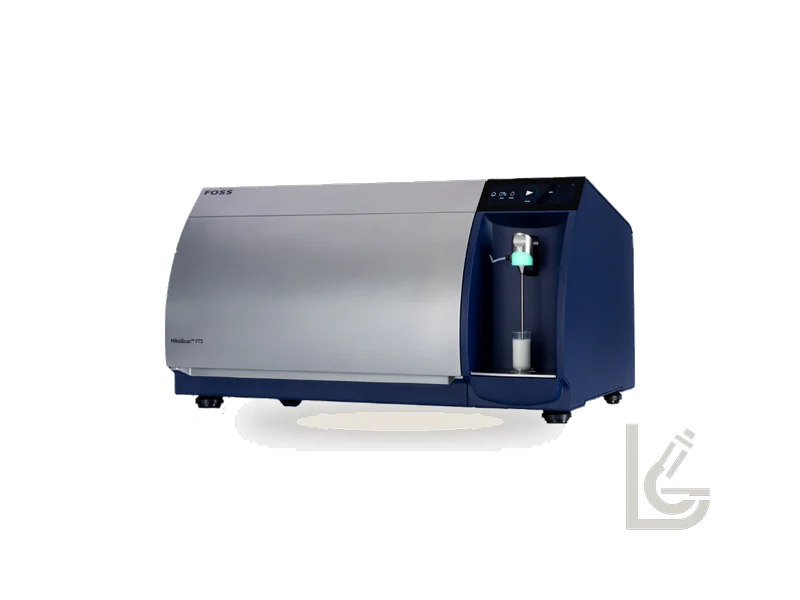
MilkoScan Mars is a compact FTIR analyser for raw and processed milk, cream and whey. It fits intake and routine laboratories that need core parameters for a fast batch decision. MilkoScan FT3 supports a broader range of liquid and semi-solid dairy products, standardisation, process and final-product control, and abnormality screening. FOSS states that FT3 provides automatic standardisation, adaptive sample handling and milk results from 30 seconds.
For laboratories working with GOST 32255-2013, compliance depends on the instrument, calibration, homogeneous sample preparation, reference-method checks and the quality-control procedure.
Grain and feed: Infratec or NIRS DS3
Infratec rapidly analyses whole grain, oilseeds and pulses at intake, segregation and storage without grinding. NIRS DS3 is a broader laboratory NIR platform for ground and unground samples, feed, raw materials and finished products when relevant calibrations are available. They often complement each other: Infratec accelerates batch decisions, while NIRS DS3 expands laboratory coverage.
ISO 12099 and its adopted versions define the framework for calibration, validation and comparison with reference results. They do not make every calibration universally valid for every crop or feed.
Meat, cheese and protein: dedicated or reference control
FoodScan 2 Meat supports rapid meat control from incoming material to final batch. FoodScan 2 Dairy / Cheese provides a dedicated workflow for cheese and solid dairy products. NIRS DS3 is considered when one laboratory covers several industries and manages separate calibration packages.
NIR and FTIR estimate protein rapidly from a spectrum. Kjeldahl determines total nitrogen and converts it to protein using a product factor. Kjeltec 9 with a Digestor and fume handling therefore complements rapid analysis through reference control, calibration verification and approved wet chemistry.
How LabLog configures a FOSS system in Uzbekistan
Selection starts with matrices, decisions made from results and sample throughput. Applicable GOST, ISO or internal procedures, parameter ranges, reference capability, traceability and laboratory utilities are then documented. Only then should models, calibrations, autosamplers, consumables, LIMS connectivity and service be compared.
LabLog supports the complete project in Uzbekistan: technical brief, configuration, official supply, commissioning, operator training, method verification and ongoing support. No website price is published because a defensible proposal depends on the complete configuration and customer workflow.
- Matrices and samples per shift
- GOST, ISO and reference methods
- Calibrations, consumables, training and service
FAQ
FAQ
Which FOSS analyser should be selected for milk?+
MilkoScan Mars supports rapid routine control of core parameters. MilkoScan FT3 covers broader products, standardisation, process control and screening. The final choice depends on matrices and throughput.
How does Infratec differ from NIRS DS3?+
Infratec focuses on whole-grain analysis without grinding. NIRS DS3 is a broader laboratory platform for multiple matrices and calibration packages.
Does NIR replace the Kjeldahl method?+
NIR accelerates routine control, but calibrations are verified against reference data. Kjeldahl remains important for nitrogen determination and protein calculation.
Where can FOSS be implemented in Uzbekistan?+
LabLog Group supports FOSS configuration, official supply, commissioning, training, calibrations, consumables and service in Uzbekistan.
Sources and documents